
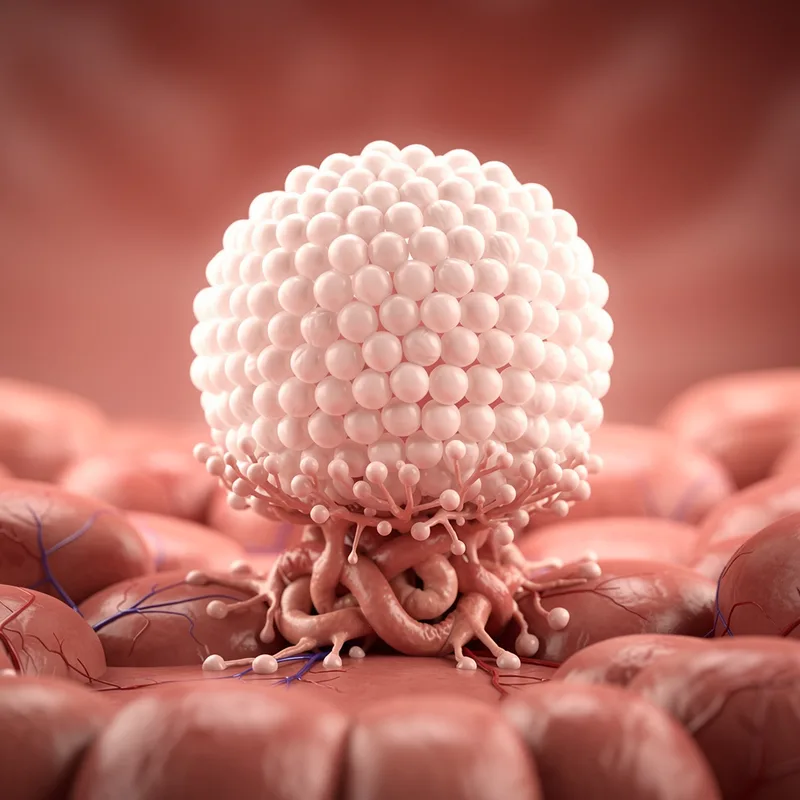
trophoblast
 1
9.9
1
9.9

- noun
- /ˈtroʊfəˌblæst/
- Specialized
- The findings demonstrate that malaria parasitaemia prior to 20 weeks' gestation affects placentation and may contribute to poor pregnancy outcomes due to dysregulation of trophoblast invasion.
- trophoblast cells
- trophoblast invasion
- trophoblast invades
Examples
-
Extravillous trophoblast invasion is highly regulated and is critical to establishing physiologic uteroplacental blood flow.
Blog text (3) -
Evidence consistent with increased trophoblast invasion among nourished women with early pregnancy malaria parasitaemia was also found.
Blog text (3) -
The first layer of cells that develops into the placenta is called the trophoblast.
Blog text (11) -
Placental bed biopsies are necessary to determine if the effects of early pregnancy malaria parasitaemia on trophoblast invasion are physiological or pathological.
Blog text (3) -
The blastocyst is a sphere made up of an outer layer of cells (the trophoblast), a fluid-filled cavity (the blastocoel), and a cluster of cells on the interior (the inner cell mass).
Academic text (2007) -
It contains the inner cell mass, from which embryonic stem cells are derived, and an outer layer of cells called the trophoblast that forms the placenta. (It is approximately 1/10 the size of the head of a pin.)
Academic text (2007) -
It has been previously hypothesized that malaria parasitaemia in early pregnancy disrupts trophoblast invasion, leading to diminished utero-placental blood flow and, ultimately, intrauterine growth restriction.
Blog text (3) -
The trophoblast cells invade the lining of the uterus and thereby begin implantation.
-
The first layer of cells that develops into the placenta is called the trophoblast.
-
The trophoblast cells signal the macrophages to come and clean up the dead cell mess.
Synonyms

A thin outer layer that surrounds a young animal in birds, reptiles, and mammals before it hatches or is born
Surface Forms
Morphology
trophoblast = tropho + blast
The components 'tropho' and 'blast' are specialized scientific terms and not transparent to an average learner without specific biological knowledge.
Etymology
Trophoblast comes from Greek parts troph- ('nourish') and -blast ('bud' or 'young cell'). So, the name fits: these outer early cells help 'feed' the embryo, attach it to the womb, and later form the placenta.