
tritium
 5
9.8

- noun
- /ˈtrɪtiəm/
- Specialized
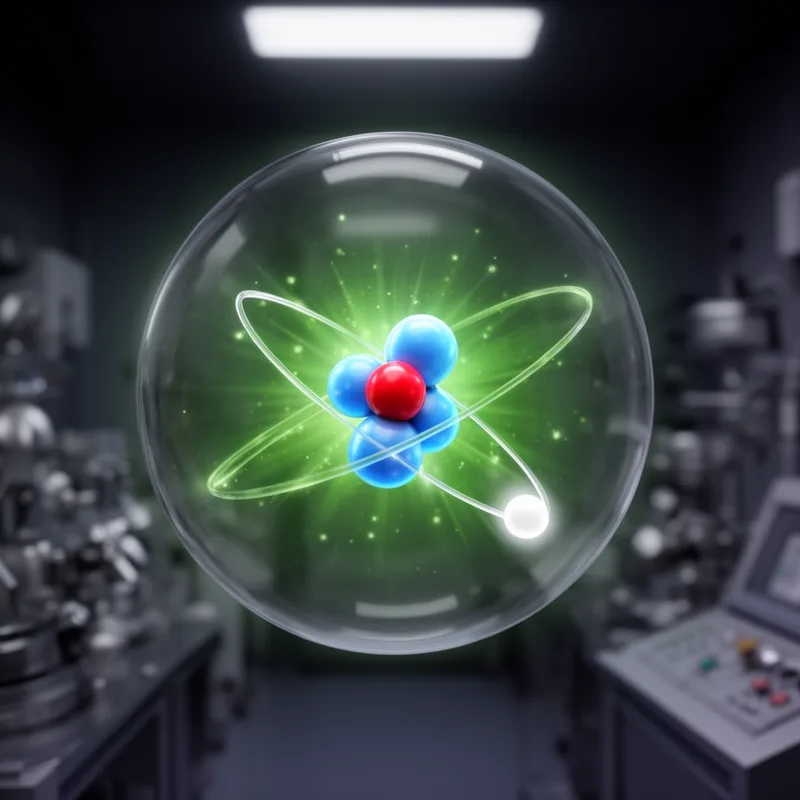
- Tritium, which has two neutrons, is three times heavier than ordinary hydrogen.
- deuterium and tritium
- tritium betavoltaic
- tritium mixture
Loading YouTube…
Watch on YouTubeWe can breed our own tritium, our own fuel.
- We can breed our own tritium, our own fuel.
- Now on Earth we would use the fuels deuterium and tritium, which are types of heavy hydrogen.
- Whatever its name means, the device also uses deuterium and tritium as fuel.
- They also said they'd seen some decay products of fusion reactions, notably nutrients and tritium.
- Technically it's hydrogen with one extra neutron in its nucleus, deuterium, or with two extra neutrons in its nucleus, tritium.
- In any case, you don't want tritium in your tea, and neither do fish.
Examples
-
Nowadays, tritium is produced in nuclear reactors, in the heavy water used to slow down (moderate) the reactor neutrons.
Academic text (2012) -
And tritium will have a key role in the fusion reactors of the future.
Academic text (2012) -
Precious tritium is the fuel that makes this project go.
-
We can breed our own tritium, our own fuel.
-
Under high temperatures, tritium can produce a nuclear fusion reaction.
Academic text (1999) -
The company said the tritium was contained on plant property and poses no danger to the public.
Blog text (27) -
Furthermore, tritium is ideal from a safety and regulatory perspective.
Academic text (2012) -
For all those reasons, tritium has emerged as the beta source of choice for betavoltaic devices.
Academic text (2012) -
Deuterium and tritium are being investigated as fuel sources for nuclear fusion.
Academic text (1999) -
In 1934, Rutherford and Mark Oliphant bombarded deuterons with neutrons and thus created tritium, the third hydrogen isotope.
Academic text (2012)
Surface Forms
Morphology
tritium = trit + ium
Contains the combining form 'trit-' (third) plus the chemical noun-forming suffix '-ium'; the 'third' element is visible but the specific meaning 'a hydrogen isotope' is specialized and not fully derivable by an average B1 learner.
Etymology
The word tritium comes from the root tri- meaning 'three', as in triangle or trio, and the element ending -ium. That's why it names a form of hydrogen whose core has one proton and two neutrons, making it 'hydrogen number three'.