
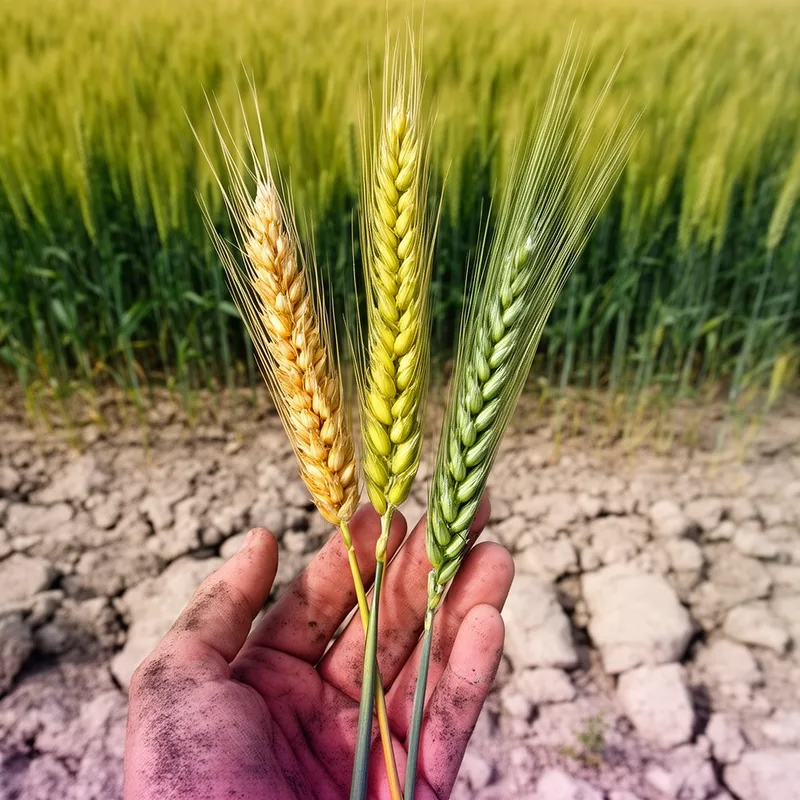
triticale


 1
8.2
- noun
- /ˌtrɪtɪˈkeɪl/
- Specialized
- The team looked at crops such as corn, peas, proso millet, safflower, sunflower, triticale, and winter wheat, with some crops grown for grain and some for forage.
- triticale and rye
- triticale and wheat
Examples
-
Its root grain, triticale, can trace its ancestry all the way back to 20th-century Canada, where--
-
Even bacon can be healthy if not a daily indulgence, in the right amount and preparation; even kamut or triticale can be bad for someone with celiac disease.
Blog text (29) -
The effect of a multigenerational diet containing genetically modified triticale on the immune system in mice. M. Krzyżowska et al.
Blog text (17) -
The obtained results indicate that multigenerational use of feeds for rodents containing GM-triticale leads to the expansion of the B cell compartment in the secondary lymphoid organs, but it is not caused by malignant processes or the allergic response.
Blog text (17) -
Farmers often choose triticale as a resilient crop due to its high yield and adaptability to various climates.
-
Many organic farmers grow triticale to enhance soil health as a cover crop during the winter months.
-
When combined with other grains, triticale helps improve the nutritional value of animal feed.
Surface Forms
Etymology
Triticale was made by joining the Latin names Triticum and Secale, meaning 'wheat' and 'rye'. So triticale is the grain that comes from crossing 'wheat' and 'rye', which explains why farmers grow it for tough soil and for animal feed.