
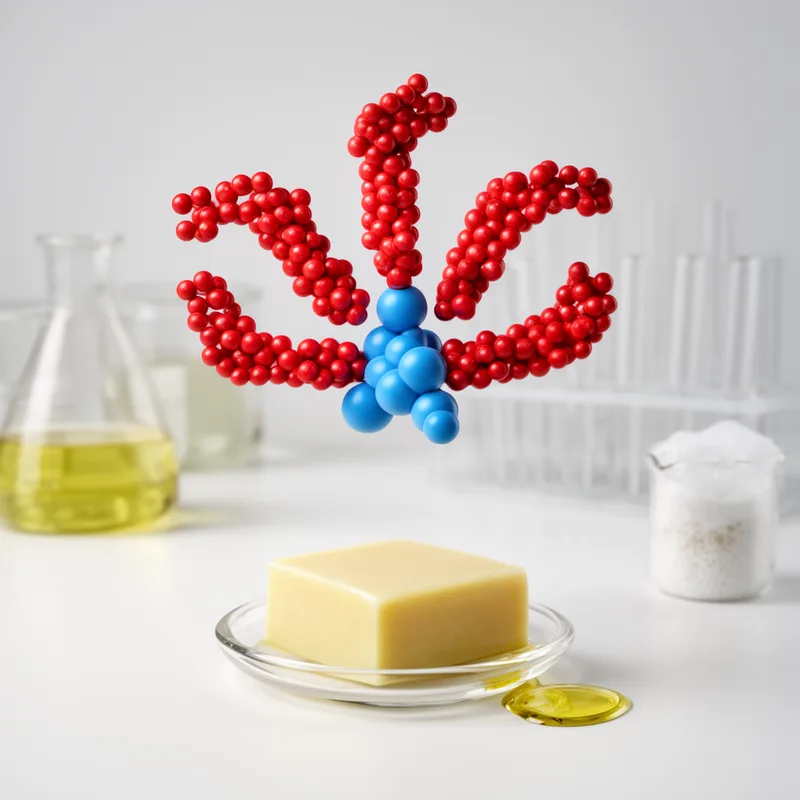
tristearin
- noun
- /ˌtrɪsˈtɪərɪn/
- Specialized
- Cocoa butter contains significant amounts of tristearin, contributing to its texture and melting point.
Examples
-
During saponification, tristearin is broken down into glycerol and stearic acid.
-
Many animal fats contain tristearin as a major component.
-
Tristearin is frequently used in laboratory studies to investigate fat digestion and absorption.
-
The chemical formula for tristearin is C57H110O6.
-
Tristearin is commonly found in animal fats and is often used in food production.
-
In addition to biological applications, tristearin plays a role in the formulation of certain cosmetics.
-
Tristearin can be derived from both animal and plant sources, making it versatile for various industries.
Synonyms


 1
9.9
A white, waxy fat used to make candles, soaps, and cosmetics

A fat-like ingredient that helps mix oil and water in foods and creams
Surface Forms
Morphology
Etymology
The word tristearin breaks into tri- meaning 'three', like in tricycle, and stearin, from a word for 'fat' or 'tallow'. So, tristearin is a fat made of three stearic acid parts joined to a glycerol molecule.