
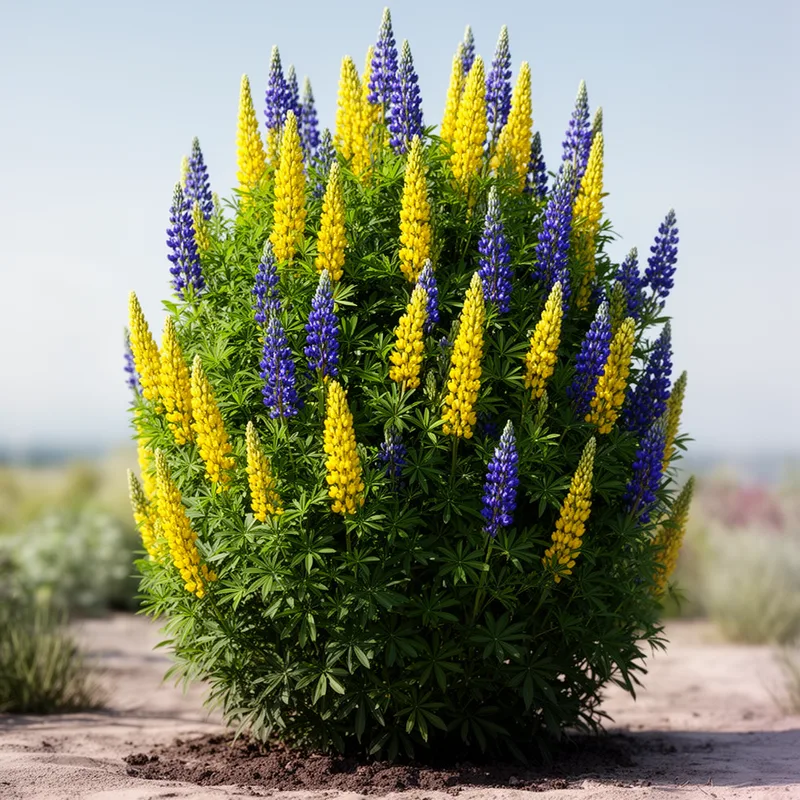
tree lupine
- noun
- /triː ˈluːpaɪn/
- US
- The tree lupine is admired for its vibrant yellow blossoms along the Californian coast.
- tree lupine (Lupinus arboreus)
Examples
-
Gardeners in Australia often cultivate tree lupine for its ornamental value and resilience.
-
With its blue and yellow flowers, the tree lupine brightens up many wild landscapes.
-
The tree lupine blooms beautifully in spring.
-
Many gardeners love the tree lupine for its vibrant colors.
-
The garden was vibrant with the yellow blooms of the tree lupine that flourished in the sunny spot.
-
In coastal areas, the tree lupine adds a splash of color with its striking blue flowers in spring.
-
The tree lupine, known for its resilience, thrived on the cliffs overlooking the ocean.
Synonyms

A bush with bright yellow or blue flowers that stays green all year and often grows on coasts
Surface Forms
Morphology
Etymology
Tree lupine is made of tree and lupine because this lupine grows tall and bushy like a 'small tree'. The word lupine comes from an old word for 'wolf' because people long ago thought the plant used up the soil, so tree lupine now means a tall, evergreen bush with showy flowers.

