
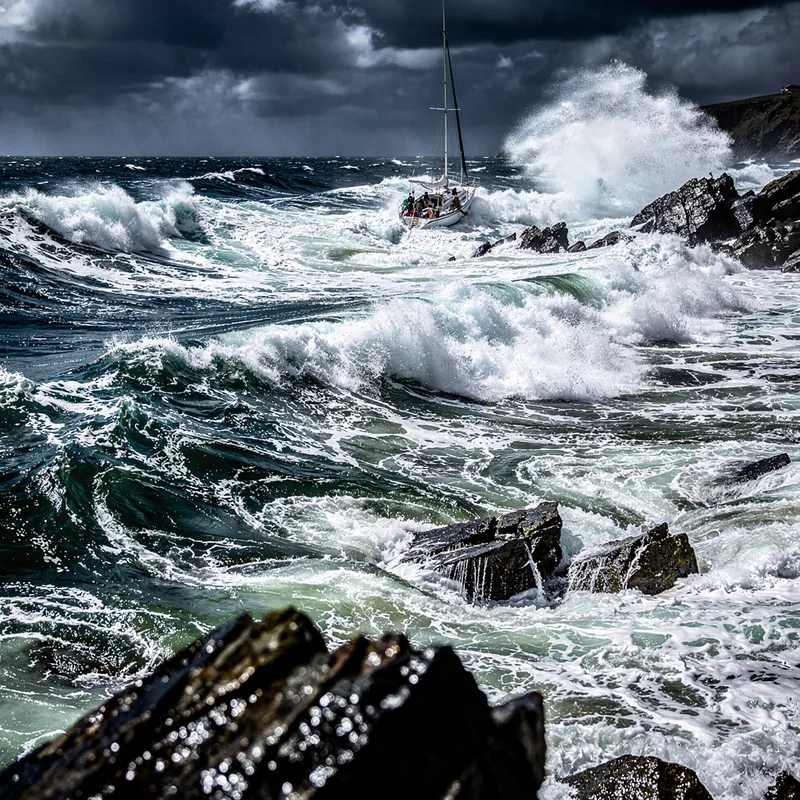
treacherous water
 1
7.8
1
7.8

- noun
- /ˈtrɛtʃərəs ˈwɔtər/
- Many fishermen avoid the treacherous waters where hidden obstacles can damage their boats.
- navigate the treacherous waters
Loading YouTube…
Watch on YouTubeBut the question becomes, why does our boat keep ending up in treacherous waters?
- But the question becomes, why does our boat keep ending up in treacherous waters?
Examples
-
His companions mourned, but only briefly; he had known the risk, as all of them had, and had signaled his acceptance when he entrusted himself to the cold, treacherous waters.
Fiction book (1991) -
The storm created treacherous waters, making it unsafe for small vessels to navigate the coast.
-
If he thinks he has found Its location, then you are heading towards truly treacherous waters, my friend.
-
- Only the second man to conquer the treacherous waters of the English Channel.
-
Multilateral agencies, often with little or no experience working in South Africa after decades of sanctions, are ill-equipped to navigate such treacherous waters.
Academic text (1992) -
Sir Baldric crashed out of the bushes, tied a cork-tipped arrow to a rope, and shot it across the treacherous waters.
Fiction book (2002) -
To win my famous race, your team must be the first to brave the treacherous waters of the bay, devour a mystery bowl of my delicious pasta, and ride to the top of Mount Portorosso and back!
-
The boat capsized in the treacherous waters near the rocky shore due to strong currents.
Synonyms
 3
3.6
3
3.6
Sea or big lake with strong waves that make travel by boat difficult
Antonyms

How Dangerous

Surface Forms
Morphology
The meaning 'a body of water that is dangerous or unpredictable' follows directly from combining the adjective 'treacherous' (dangerous, likely to cause harm) with the noun 'water' (a body of water). This simple adjective+noun composition is cross-linguistically common and therefore readily understandable to a B1 learner who knows both constituent words.
Etymology
Treacherous water paints a picture of water that hides danger: treacherous means something that looks safe but can fool you, and water can hide strong currents, rocks, or sudden storms. That's why the phrase is used to mean 'dangerous or unpredictable' water.