
transubstantiation
 4
9.9

- noun
- /ˌtrænzəbˌstænʧiˈeɪʃən/
- Specialized
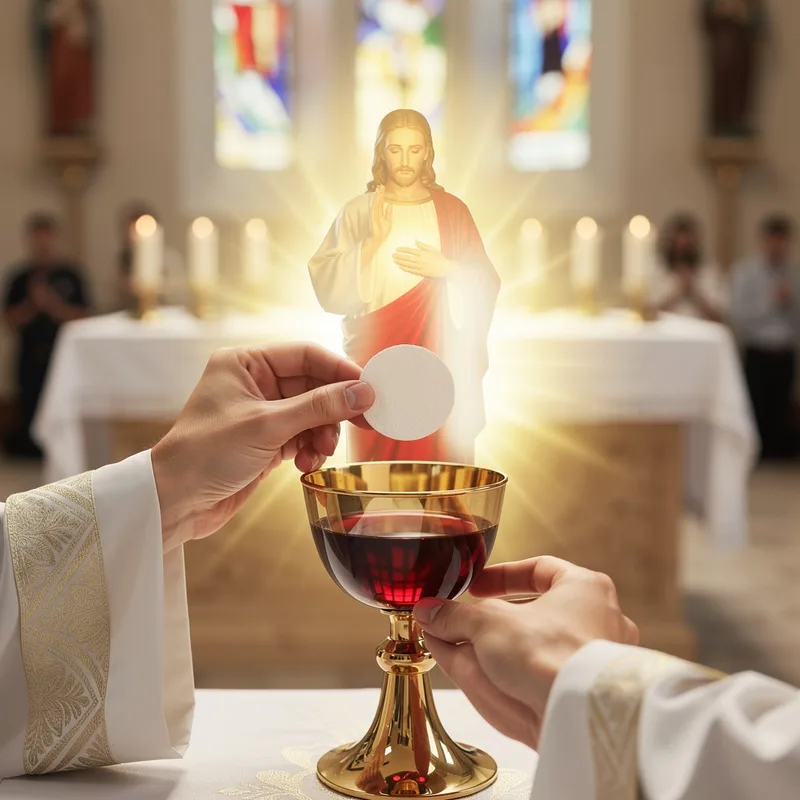
- The doctrine of transubstantiation explains how the elements of the Eucharist still appear as bread and wine while being truly Christ's body and blood.
- the miracle of transubstantiation
- transubstantiation in the Eucharist
Loading YouTube…
Watch on YouTubeOr you could say there's a rather close resemblance between the sacrifice of the mass from transgenderism to transubstantiation.
- Or you could say there's a rather close resemblance between the sacrifice of the mass from transgenderism to transubstantiation.
Examples
-
Serious issues were at stake, not the least of which was the Catholic understanding of transubstantiation in the Eucharist, which relied on a robust notion of extension that sustained the species of the host and supposed a transmutation between real corporeal substances, not between mere phenomena.
Academic text (2016) -
Only those ministers with Apostolic succession, Catholic priests, are able to enable the miracle of Transubstantiation.
Blog text (19) -
If I did not believe in the doctrine of transubstantiation, I would move on to a Protestant group.
Blog text (19) -
Although we do not teach transubstantiation as such, we Orthodox certainly do believe in a literal Body and Blood.
Blog text (19) -
That's the miracle of Transubstantiation when the wafer transforms into the Body of Christ.
Blog text (4) -
During the Eucharist, Catholics believe that the bread and wine undergo transubstantiation to become the body and blood of Christ.
-
Many theologians debate the implications of transubstantiation in understanding the sacramental presence of Christ during the Mass.
Surface Forms
Morphology
transubstantiation = transubstantiate (opaque) = trans + substant + tion + ion
Although formed from 'trans-' + 'substant-' plus a noun-forming suffix, the meaning is a specialized theological doctrine and is not derivable by an average learner from its parts.
Etymology
Transubstantiation comes from the Latin parts trans- 'across' or 'change' and substantia 'substance'. So it literally means a change in the substance while the outer form stays the same, which is why the word is used for the belief that the bread and wine become the body and blood of Christ even though they still look like bread and wine.