
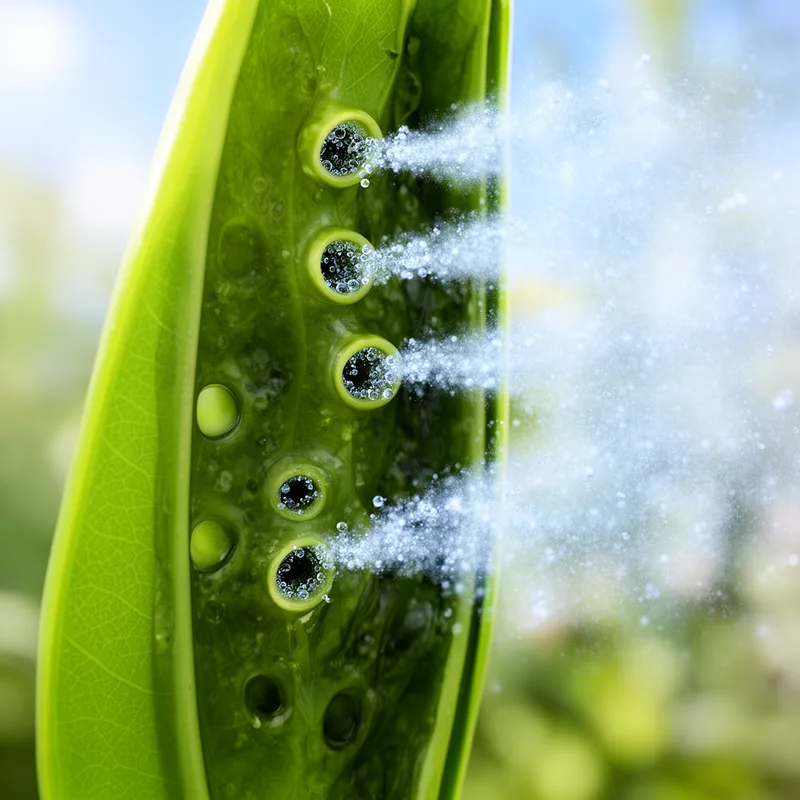
to transpirate
- verb
- /trænˈspɪrɪt/
- Specialized
- Plants transpirate water through their leaves.
Examples
-
Water vapor can transpirate through the leaf tissues into the atmosphere.
-
Certain chemicals are able to transpirate from soil into the surrounding air.
-
The process allows oxygen to transpirate through semipermeable membranes in laboratory experiments.
-
Why do trees transpirate so much during summer?
-
Water vapor can transpirate through the leaf tissues into the atmosphere.
-
The process allows oxygen to transpirate through semipermeable membranes in laboratory experiments.
-
Certain chemicals are able to transpirate from soil into the surrounding air.
Synonyms

 1
8.3
1
8.3

To pass liquid or gas through the small holes in a material

To pass slowly through a surface and come out as small drops
How Permeable
24
6.0
 40
5.5
40
5.5
- Specialized
44
2.8
82
2.7
Surface Forms
Morphology
Etymology
Transpirate comes from the parts trans- 'across' and spirare 'to breathe', so it means 'to breathe across' a surface. That's why transpirate is used for a gas or vapor that passes through tiny holes or plant tissues.