
transcriptomic


 1
9.9
- adjective
- /trænsˈkrɪp.təˌmɪk/
- Specialized
- By comparing transcriptomic data from healthy and diseased organisms, scientists can identify potential biomarkers.
- transcriptomic data
- transcriptomic profile
- transcriptomic age
Examples
-
Here we have achieved the first steps towards a metabolic age predictor to overcome the limitations of previous transcriptomic-only approaches.
Academic text (2018) -
To gain insights into tissue-specific transcriptomic changes in HT, a few studies have utilized rodent models.
Academic text (2017) -
Our transcriptomic age can therefore be older or younger than our chronological age.
Academic text (2018) -
We start with the transcriptomic data and chronological ages from the CD4 T-cells of 499 individuals.
Academic text (2018) -
As omics data to constrain the model, here we use transcriptomic data from each individual to generate personalized metabolic models.
Academic text (2018) -
Next, we explored the multi-tissue transcriptomic and genetic heterogeneity among HT individuals and whether the heterogeneity is linked with other phenotypes.
Academic text (2017) -
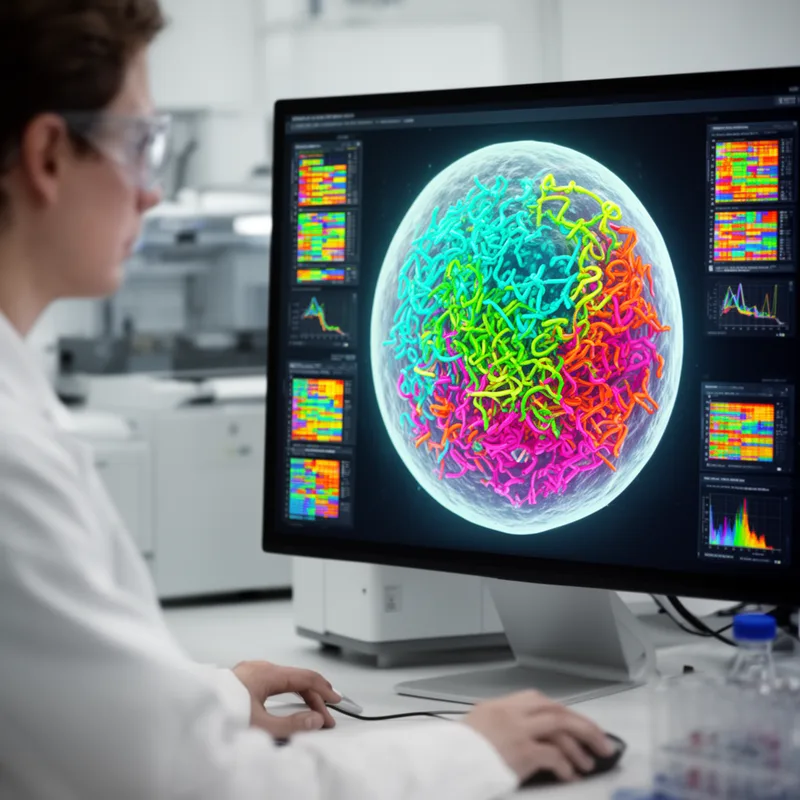
Researchers are analyzing the transcriptomic profiles of various tissues to understand gene expression patterns.
-
The study provided new insights into the transcriptomic changes occurring in cancer cells.
How Comprehensive

Surface Forms
Morphology
transcriptomic = transcriptome (semi-transparent) = transcript + ome + ic
Built from the recognizable element 'transcript' but relies on the technical '-ome'/'-ic' (omics) elements, which are specialized and not obvious to average learners.
Etymology
Transcriptomic comes from transcript ('a copy' or 'record') and the ending -omic, like in genomic, meaning 'the whole set of'. So, transcriptomic is about the study of all RNA transcripts in a cell.