
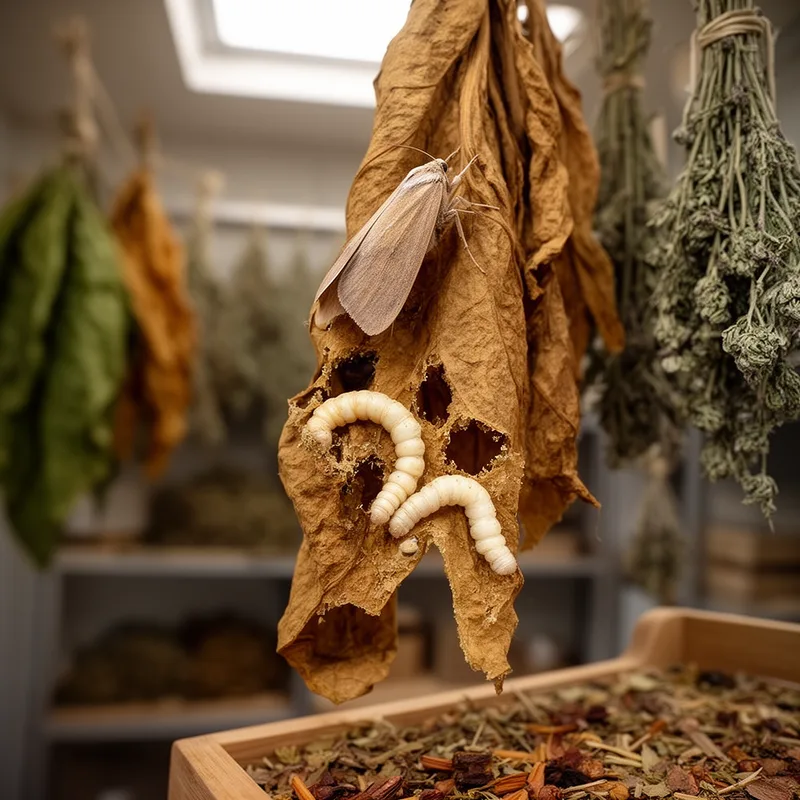
tobacco moth
- noun
- Specialized
- The larvae of the tobacco moth can also attack dried herbs and spices in addition to tobacco.
Examples
-
The warehouse suffered significant damage when a colony of tobacco moths infested the stored leaves.
-
Farmers implement strict controls to prevent tobacco moth outbreaks during the curing process.
-
The tobacco moth infested the storage room.
-
Have you seen a tobacco moth before?
-
The larvae of the tobacco moth can cause severe losses if they invade tobacco storage areas.
-
To protect their crops, farmers monitor for signs of tobacco moth infestation in their warehouses.
-
When cleaning the barn, we found evidence of a tobacco moth problem that needed immediate attention.
Synonyms
A small moth whose young eat tobacco and other dried plant foods in storage and damage them

A small moth whose larvae eat and damage dried plant goods like cacao beans and tobacco
Surface Forms
Morphology
The noun compound 'tobacco moth' is directly compositional: combining 'tobacco' (dried leaves) with 'moth' (an insect) yields a moth associated with tobacco or feeding on it. This follows common compounding patterns in English (and many languages), so a B1 learner who knows both constituents will reliably infer the meaning.
Etymology
Tobacco moth comes from small moths whose young caterpillars eat dried tobacco leaves kept in storage. They hide in piles of leaves and ruin the crop, so the name now means a 'pest' of stored plant products.

