

tobacco hornworm
- noun
- /təˈbækoʊ hɔrnˌwɜrm/
- Specialized
- And we see this with moths in the possession, with the sheer number of tobacco hornworm moths that she has in her room.
- tobacco hornworm moth
- Manduca sexta, the tobacco hornworm
Examples
-
Identifying a tobacco hornworm is crucial for controlling pests in your garden.
-
In an ARS lab test at Weslaco, immature Serangium parcesetosum beetles all but ignored eggs of corn earworm and tobacco hornworm.
Academic text (1997) -
The gardener discovered a tobacco hornworm devouring the leaves of his plants.
-
During the summer, many gardeners often find tobacco hornworms hiding on their tobacco plants.
Synonyms

 43
1.0
43
1.0

A soft young insect like a worm that becomes a butterfly or moth and eats leaves
 1
7.9
1
7.9
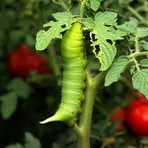
A large green caterpillar with a horn at its tail that eats tomato plants

A large green caterpillar called the tobacco hornworm that eats tobacco and tomato plants

A large green caterpillar with white stripes that eats tomato and tobacco plants
How Destructive

Surface Forms
Morphology
The meaning is compositionally built: 'tobacco' names the host plant and 'hornworm' names the large caterpillar, so a learner who knows both constituents will infer it is a hornworm that feeds on tobacco. This follows a common noun–noun naming pattern (e.g., potato beetle) and is cross-linguistically transparent, making it comprehensible to a B1 learner.
Etymology
Tobacco hornworm comes from a simple picture: a large green 'worm', a caterpillar with a horn-like tail, that eats tobacco plants, so people called it a hornworm of tobacco. That's why the name tells you it is a big green caterpillar that can be a 'pest' on tobacco crops.