
titanic acid
- noun
- /taɪˈtænɪk ˈæsɪd/
- Specialized
 :
ácido titánico
:
ácido titánico
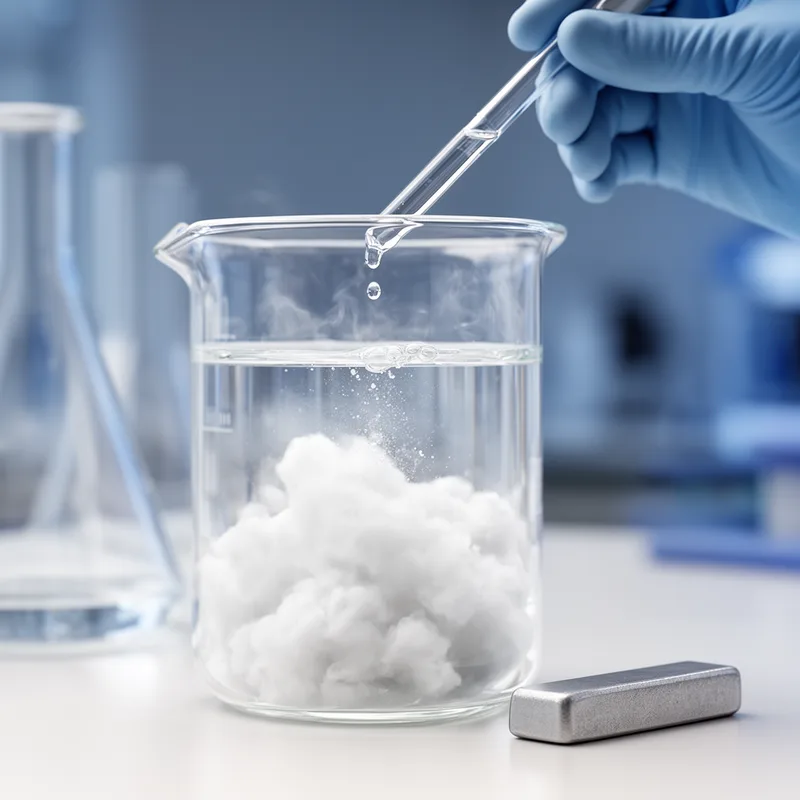
- Pure titanic acid appears as a soft, white precipitate in laboratory reactions.
Examples
-
The chemist prepared titanic acid by adding ammonia to titanium sulfate solution.
-
In the lab, the scientist observed that pure titanic acid formed a white precipitate when mixed with other chemicals.
-
Research on the properties of titanic acid has led to advancements in materials science.
-
The chemist studied titanic acid for its unique properties.
-
Many researchers are exploring the applications of titanic acids in industry.
-
Studies on titanic acid have been crucial for developing new materials in nanotechnology.
-
To synthesize titanic acid, the researcher slowly added ammonia to a heated titanium dioxide solution.
Surface Forms
Morphology
titanic + acid
This is a specialized chemical name whose specific meaning (a hydrated form of titanium dioxide) depends on technical nomenclature rather than ordinary composition. The element 'titanic' is either unknown to a B1 learner or likely misinterpreted as 'huge' or only recognizable as 'relating to titanium' with domain knowledge, so the overall sense cannot be derived from the parts by an average learner.
Etymology
The noun titanic acid gets its name from the metal 'titanium', which was named after the strong Titans of Greek myth. So titanic here means 'from titanium' and acid tells you it is a weak, white acid that contains water.

