
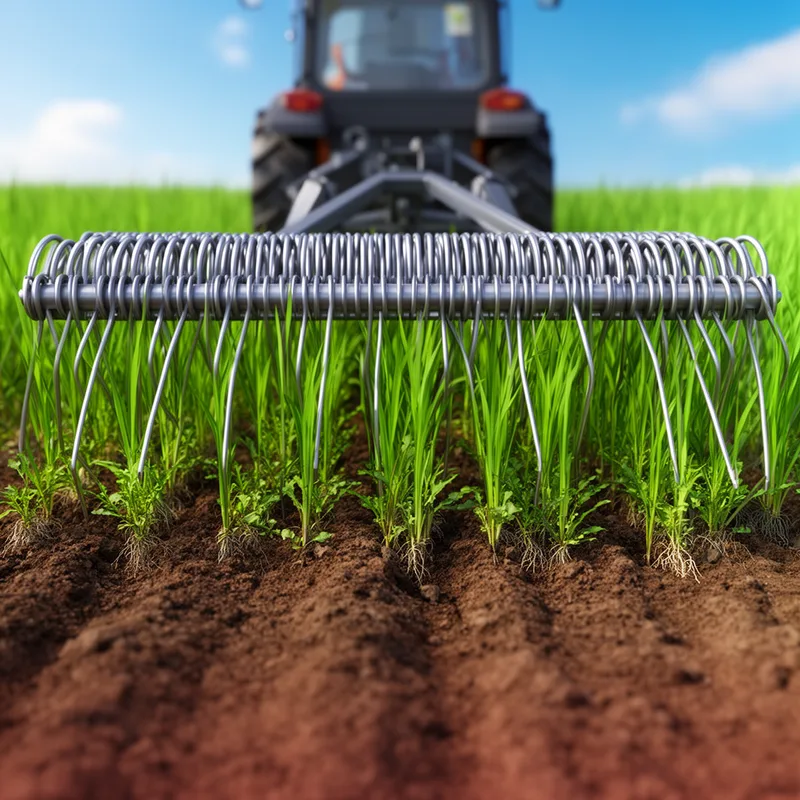
tine weeder
- noun
- Specialized
- The farmer attached a tine weeder to his tractor to remove weeds from the young wheat.
Examples
-
Using a tine weeder helps aerate the soil and control unwanted plants without chemicals.
-
They invested in a new tine weeder to improve the efficiency of their organic farm.
-
The tine weeder is essential for organic farming.
-
Farmers use a tine weeder to manage weeds effectively.
-
The farmer attached a tine weeder to his tractor to remove weeds from the young wheat.
-
They invested in a new tine weeder to improve the efficiency of their organic farm.
-
Using a tine weeder helps aerate the soil and control unwanted plants without chemicals.
Synonyms

A farming tool with small metal teeth that follows the ground to remove weeds
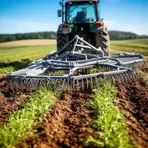
A farm tool with spring teeth on a flexible frame that removes weeds from fields

A farming tool with metal spikes that loosens soil and removes small weeds

A small tool for pulling weeds from a garden or lawn
How Gentle
- Specialized


 1
3.2
16
1.0
1
3.2
16
1.0
- Specialized
1
5.0
Surface Forms
Morphology
The meaning is directly compositional: a 'tine weeder' is a weeder that has tines, so a learner who knows 'tine' (a sharp projecting point) and 'weeder' (an implement for removing weeds) can infer it is an implement for weeding that uses tines. Naming tools by their salient parts or features is a common, non-metaphorical pattern across languages, making the construction immediately interpretable to learners who know both constituents.
Etymology
The noun tine weeder is named for its thin, fork-like parts called tines that comb the soil and lift small weeds. That's why the tool is a 'weeder' that removes unwanted plants without hurting young crops.