
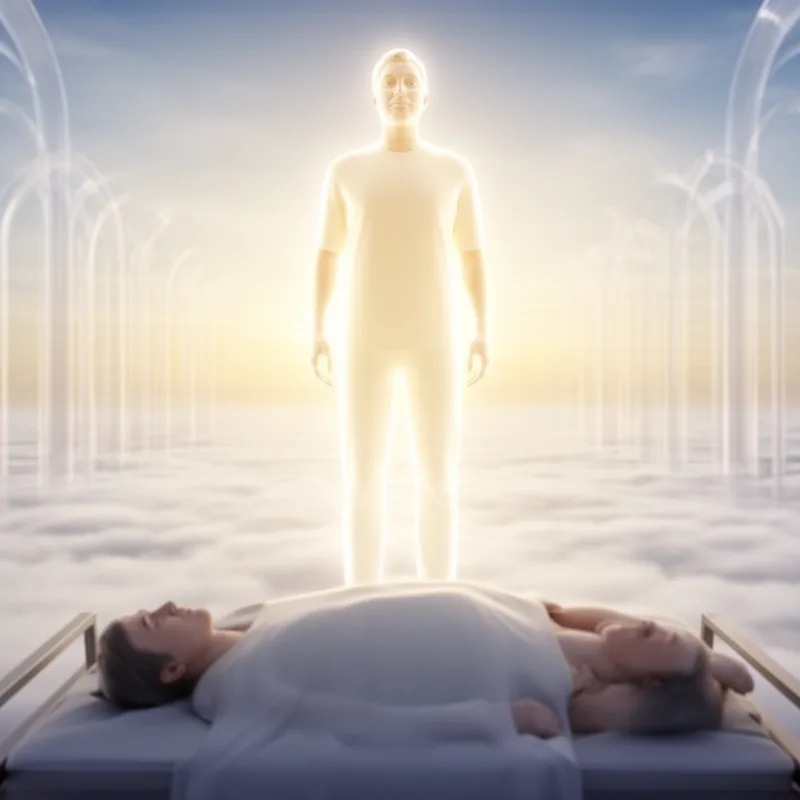
timeless existence
- noun
- Literature
- Many religions speak of a timeless existence after death.
Examples
-
Some believe that achieving enlightenment results in timeless existence free from the cycle of birth and death.
-
The philosopher wrote about the possibility of timeless existence beyond our mortal world.
-
Many religions promise a timeless existence to those who lead a virtuous life.
-
What is timeless existence?
-
Many religions promise a timeless existence to those who lead a virtuous life.
-
Some believe that achieving enlightenment results in timeless existence free from the cycle of birth and death.
-
Many religions speak of a timeless existence after death.
Synonyms
 224
5.8
224
5.8

Time that never ends, often imagined after death
 94
5.7
94
5.7
A time that never ends
 73
7.2
73
7.2
A life that never ends
 46
7.4
46
7.4
Life that continues forever after death
 19
9.6
19
9.6
A situation that lasts forever
 12
1.4
12
1.4
A very long time with no end
 1
7.9
1
7.9
An endless state of being after death
 1
7.5
1
7.5
A state of not being limited by time, for example in the afterlife
 1
6.0
1
6.0
A state of having no end or limit

Lasting forever without a beginning or end

An old word for a time that never ends

A state of lasting forever

A time that never ends

A state of seeming to last or really lasting without an end

A state of never dying or being remembered forever

The quality of seeming never to get older
Antonyms


Surface Forms
Morphology
The meaning is directly and transparently derived from combining 'timeless' (not affected by time/eternal) with 'existence' (state of being); a B1 learner who knows both words can infer 'a state of eternal existence' without prior exposure. This compositional pattern is straightforward and cross-linguistically regular, so the phrase is immediately comprehensible from its parts.
Etymology
Timeless existence may come from the simple image of clocks stopped and time standing still. The word timeless means 'without time' and existence means being, so the phrase came to mean a kind of 'eternal' being with no beginning or end.