

time lag
 4
4.4
4
4.4

- noun
- /taɪm læɡ/
- The average time lag for central fabrication was over the initial estimate of 14 days.
- effect of time lag
- long time lag
Loading YouTube…
Watch on YouTubeAnd we don't get that on Zoom because of this time lag problem.
- And we don't get that on Zoom because of this time lag problem.
- It may because there's a time lag because the.
Examples
-
The findings could simply be the result of the usual time lag involved in altering perceptions.
Academic text (2002) -
There is often a noticeable time lag between a change in policy and its actual effects on the community.
-
The time lag on these messages is getting longer.
-
Like all data, there is the inevitable time lag between data collection and when it is available for analysis.
Academic text (2018) -
There is a time lag between such approval and actual realization of the investment.
Academic text (1994) -
Understanding these time lags is critical to the sense of urgency about mitigation.
Academic text (2002) -
So you're saying that there you can do an experiment, there's a time lag, then you get an outcome.
-
We did not incorporate time lags into the realization of health benefits in our analyses.
Academic text (2011) -
Groundwater is commonly undervalued, and there is a deceptive time lag between withdrawals and the resultant impacts of those withdrawals.
Academic text (2006) -
The time lag in receiving feedback can hinder progress in our project.
Synonyms
 434
1.3
434
1.3
A time when something happens later than planned
 276
2.0
276
2.0
A time when something is paused or delayed
 227
1.0
227
1.0
A period of time spent staying in one place expecting someone or something
 87
2.3
87
2.3
A pause in an activity or event
 46
4.1
46
4.1
A period of time when something happens later than expected
 11
6.8
11
6.8
Delay before a device or program responds
 11
3.7
11
3.7
The time between seeing or hearing something and acting on it
 4
3.3
4
3.3
A period between two events that you can measure
 1
3.4
1
3.4
Time that passes between two events
 1
3.4
1
3.4
A period of time between a start and an end
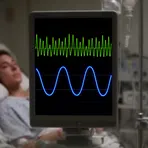
A situation in which events do not happen at the same time or speed
Antonyms


How Long

Surface Forms
Morphology
The noun phrase 'time lag' is directly compositional: 'time' (a temporal span) combined with 'lag' (a delay) yields a literal period of delay between an event and its effect. This is a common, cross-linguistic compound pattern, so a B1 learner who knows both constituents should readily infer the meaning.
Etymology
The noun time lag comes from the image of a clock that falls behind: the time it shows is late because of lag. So, time lag means a period of 'delay' between an event and its result.