
tika
 2
9.9
2
9.9

- noun
- Indian
- "With Tika, she has been playing a little better," Kohler said.
Examples
-
As an additional safeguard against my lack of driving skill, yeah,... he put the tika on the foreheads of all the members of the expedition.
-
That's a Tika.
-
The festival ends on Bhaubeej, a day when sisters pray for their brothers to have long and happy lives by performing the Tika ceremony.
Blog text (32) -
Tika Kabab Recipe
Blog text (16) -
Ascher explains how visualizing their calendar as a tika enables the Balinese to solve, in their heads, complicated questions about the occurrence of specific calendar days.
Academic text (2003) -
At the time of my research, hu ronko shirts were also made by local tailors from nonnative white cloth (tika gba kaporotui).
Academic text (2007) -
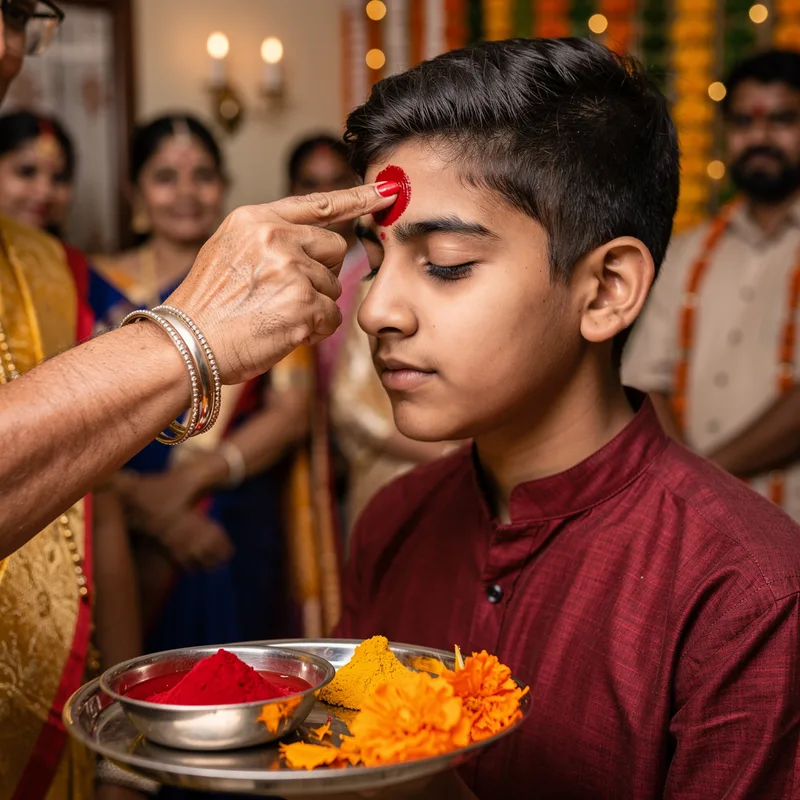
During the ceremony, the priest applied a bright red tika to the foreheads of the worshippers as a sign of blessing.
-
As part of the wedding traditions, the bride received a beautiful tika on her forehead, symbolizing her good fortune.
-
At the festival, the children eagerly lined up to receive their colorful tika, which marked the beginning of the celebrations.
Synonyms
A colored mark on the forehead used for religious or decorative reasons

A colored mark on the forehead worn in Hindu rituals as a sign of blessing

A red powder used to make a mark on the forehead in South Asian religious and social ceremonies
How Religious

Surface Forms
Etymology
The word tika comes from the Sanskrit word tilaka, which means 'mark' or 'spot' and is used in languages like Hindi and Nepali. That's why tika refers to the small colored mark put on the forehead during rituals as a sign of blessing.