

tie beam
- noun
- /taɪ biːm/
- Specialized
- A carpenter explained how a tie beam keeps the rafters stable in a wooden frame.
Examples
-
The architect specified an extra tie beam to support the old roof.
-
Without a tie beam, the stone walls might shift apart over time.
-
The tie beam supports the roof structure.
-
The architect specified a tie beam for the design.
-
A carpenter explained how a tie beam keeps the rafters stable in a wooden frame.
-
The architect specified an extra tie beam to support the old roof.
-
Without a tie beam, the stone walls might shift apart over time.
Synonyms

 104
2.7
104
2.7

A long strong piece of wood, metal, or concrete that supports part of a building
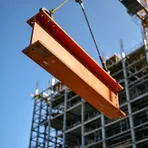 14
5.0
14
5.0
A long strong beam usually made of steel that supports buildings or bridges
 12
7.9
12
7.9
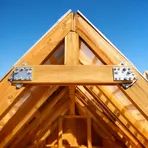
A strong beam placed across a building to stop parts moving apart

 1
6.7
1
6.7
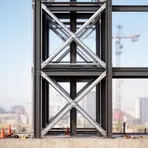
A support added to a frame to keep it steady
 1
4.9
1
4.9
A part of a building, like a beam, that holds weight
 1
5.5
1
5.5
A strong piece of wood or metal that holds the weight of parts of a building
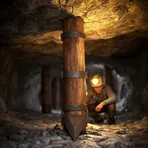
A strong post that holds up a roof or wall, for example in a mine
How Strong

Surface Forms
Morphology
The meaning is directly compositional: 'tie' (a piece of timber used for stability) combined with 'beam' (a supporting member) yields a beam whose function is to tie or hold structural members together. This noun–noun compound follows standard English compounding patterns and would be understandable to a B1 learner who knows both constituent words.
Etymology
Tie beam is a simple picture: a long beam that ties two walls or rafters together so they cannot move apart. That is why it means a horizontal beam used to 'hold together' parts of a building.