
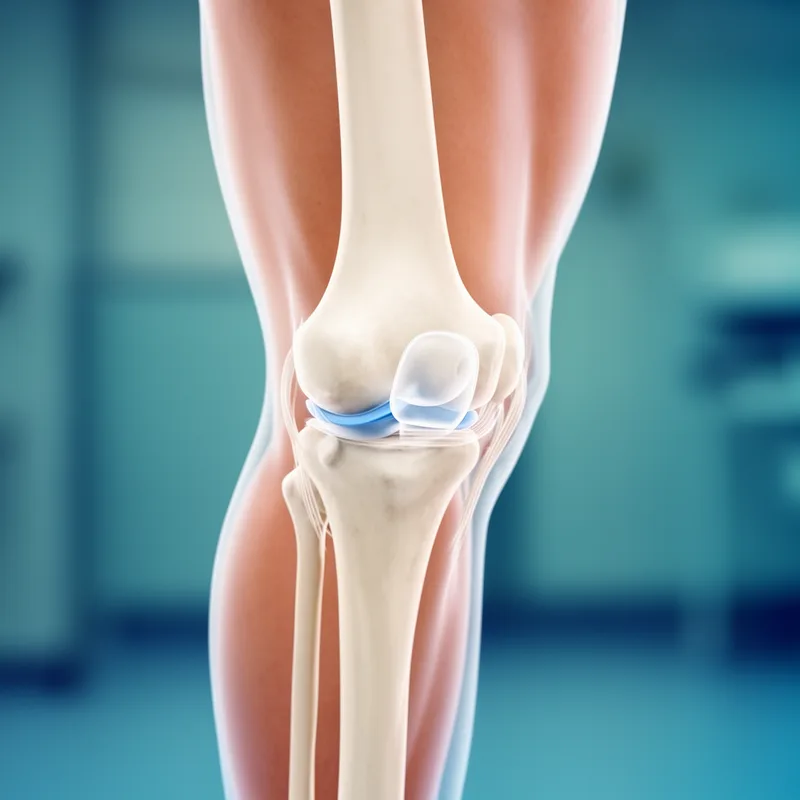
tibiofemoral
- adjective
- /ˌtɪbioʊˈfiːmərəl/
- Specialized
- The surgeon discussed the impact of tibiofemoral alignment on knee stability during the consultation.
- tibiofemoral force
Examples
-
With tibiofemoral disease, the pain is often worse with weight-bearing activities and located either medial or lateral to the midline, along the tibiofemoral joint line.
Academic text (2005) -
The theoretical estimates of tibiofemoral forces have varied between three and six times body weight, depending on the mathematical models used and on the type of activity analyzed.
Academic text (2006) -
Historically, mathematical models have been used to predict tibiofemoral forces.
Academic text (2006) -
Predictions of tibiofemoral forces are highly variable because of the complex interplay of the muscles involved in activities.
Academic text (2006) -
Forces were measured by the four load cells of the force transducer during one gait cycle to produce the total tibiofemoral force graph.
Academic text (2006) -
An implantable telemetry system was developed to measure tibiofemoral compressive forces directly in vivo.
Academic text (2006) -
Scientists have developed the next generation e-Knee with the ability to measure shear and torque forces in addition to tibiofemoral compression and tension forces.
Academic text (2006) -
With tibiofemoral disease, the pain is often worse with weight-bearing activities and located either medial or lateral to the midline, along the tibiofemoral joint line.
Academic text (2005) -
An electronic total knee prosthesis (e-Knee) was developed to directly measure tibiofemoral compressive and tensile forces in vivo.
Academic text (2006) -
Athletes often suffer from tibiofemoral pain due to the high demands placed on their knees during training.
Surface Forms
Morphology
Etymology
Tibiofemoral comes from the names of two bones: tibia ('shin bone') and femur ('thigh bone'). So it literally means the place where the shin and thigh meet, which is why it refers to the knee joint.

