
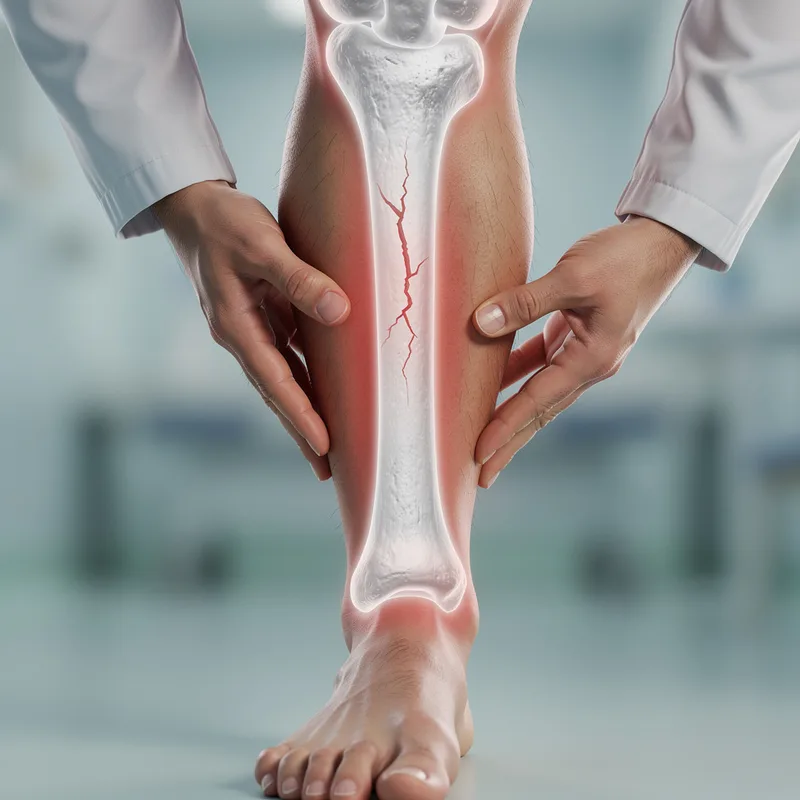
tibial
 3
7.2
3
7.2

- adjective
- /ˈtɪbiəl/
- Specialized
- During the surgery, the surgeon carefully worked near the tibial bone.
- tibial rotation
- tibial crest
- tibial plateau
Examples
-
The present study is a follow-up study after high tibial osteotomy.
Academic text (2000) -
After the injury, she felt pain in her tibial region and needed an X-ray.
-
Figure 1: Branches of the tibial nerve.
Academic text (2012) -
Figure 5. A histogram showing percent change of total contact pressure with respect to tibial rotation.
Academic text (2001) -
At each knee flexion, 15 degrees of external tibial rotation had the highest pressure.
Academic text (2001) -
In addition, FNS-KE exercise appeared to decrease the rate of tibial bone loss in our SCI subjects.
Academic text (1991) -
The tibial residuum moved 10 mm distally relative to the prosthesis internal wall.
Academic text (2001) -
The experimental setup provided control over various knee flexion angles and tibial rotations.
Academic text (2001) -
Knee flexion and extension were monitored bilaterally with electrogoniometers attached anteriorly to the tibial and femoral areas.
Academic text (1990) -
The doctor explained that the tibial artery supplies blood to the lower leg.
Compounds
- Specialized
A vein in the lower leg that carries blood from the foot toward the knee
Surface Forms
Morphology
Etymology
Tibial comes from the Latin tibia, which meant 'shinbone' and also 'flute' because people once made pipes from shin bones. So tibial means 'relating to the tibia', the larger bone in the lower leg.