
thymine
 2
6.7
2
6.7

- noun
- /ˈθaɪˌmiːn/
- Specialized
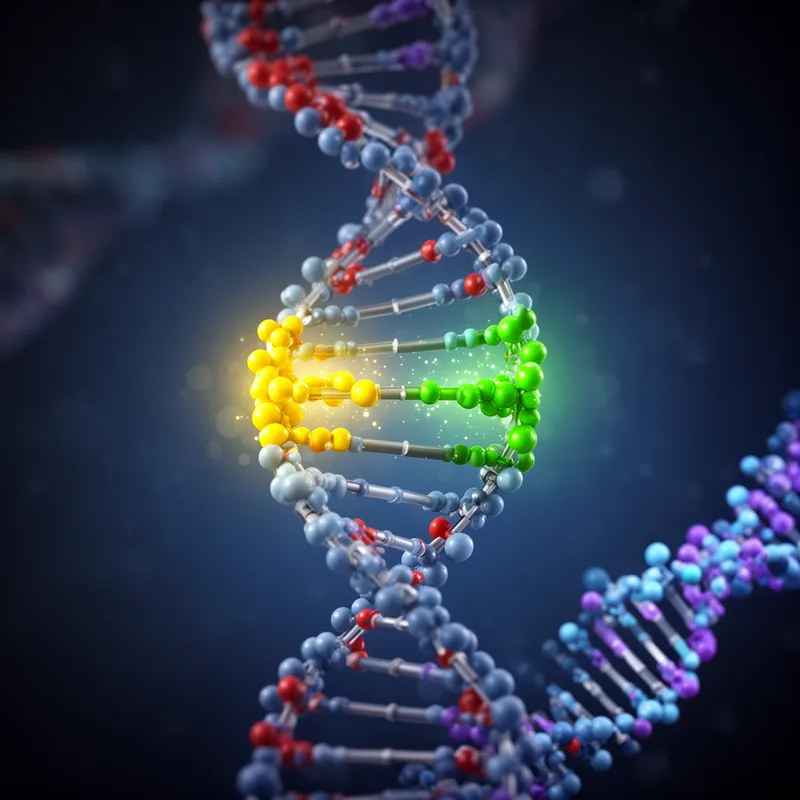
- Genes are identified by the letters AGTC, representing the base chemical nucleotide pairings of Adenine, Guanine, Thymine, and Cytosine.
- thymine and adenine
- thymine and cytosine
- thymine and guanine
Loading YouTube…
Watch on YouTubeFolate is essential for the incorporation of thymine adna nucleotide into DNA.
- Folate is essential for the incorporation of thymine adna nucleotide into DNA.
Examples
-
DNA is made of four organic bases adenine, guanine, cytosine, and thymine, or AGC and T.
-
One of the four bases in DNA, thymine plays a crucial role in cellular biology.
-
Then thymine, the right one at last.
Fiction book (1994) -
So this would be guanine adenine thymine on that sequence.
-
And in DNA one finds cytidine and thymine abbreviated as C&T.
-
Cytosine, guanine, adenine, and thymine.
-
"Notice the sequence is made up of four basic compounds: adenine, thymine, guanine, and cytosine."
Fiction book (1990) -
And there are four of these named after alphabets, adenine, guanine, cytosine, thymine, ATCG.
-
In DNA, thymine pairs with adenine to form the genetic code.
-
The presence of thymine in DNA, but not in RNA, is a fundamental distinction between the two.
Synonyms
 16
8.3
16
8.3
A base in DNA named thymine that pairs with adenine
Surface Forms
Morphology
thymine = thym + ine
The word is a technical chemical name built from a bound combining form 'thym-' and the chemical suffix '-ine'; the root is not a standalone English word and the meaning 'a DNA base' is not derivable by an average learner from the parts.
Etymology
Thymine was named after the gland thymus because it was first found in thymus tissue, and that same root is related to the herb thyme. So, thymine is one of the four DNA 'bases' that pairs with adenine, like a letter that always joins with its partner.