
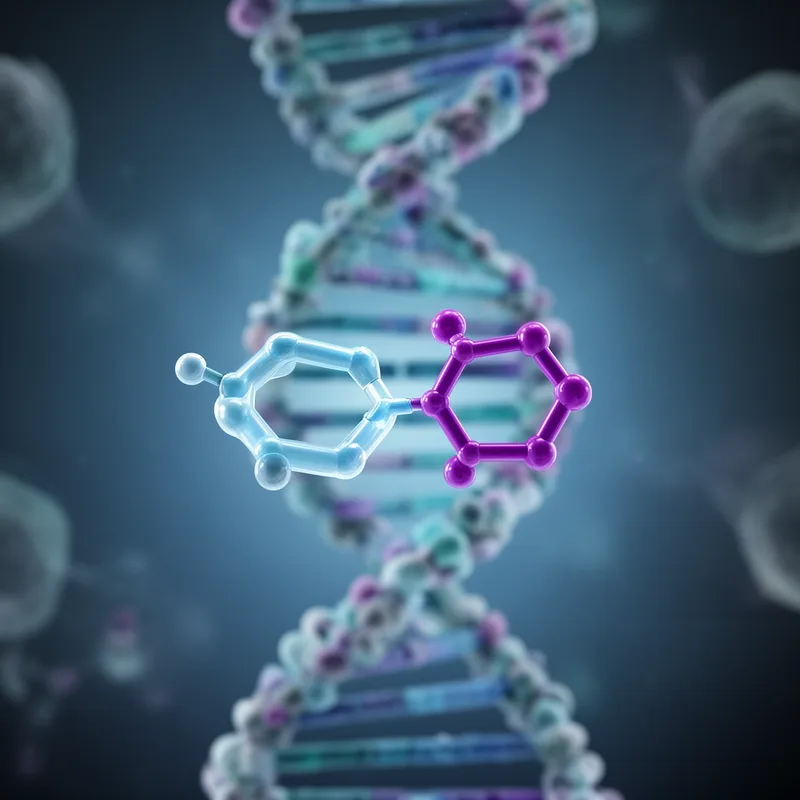
thymidine
- noun
- /θaɪˈmɪdin/
- Specialized
- Results show an overlap of nucleotides at adenine 643, or homologous thymidine, when analyzed in both the sense and antisense orientations.
- tritiated thymidine
- thymidine incorporation
- thymidine content is determined
Examples
-
Responses (incorporation of labeled thymidine) are determined by the Student's t-test comparing mean counts per minute (cpm) in cells exposed to medium alone with cells exposed to antigen.
Academic text (1996) -
Researchers measured the amount of thymidine in the DNA to study the cell division process.
-
And it's also been done with the triviated thymidine for labeling the cells at their aspert.
-
Cells are placed on filter paper, and radiolabeled thymidine content is determined in a liquid scintillation counter.
Academic text (1996) -
And here he shows you inject the thymidine so you're labeled the dividing cells.
-
These cells are mixed with inner ear proteins in microtiter plates for seven days, with exposure to tritiated thymidine during the last 20 hours.
Academic text (1996) -
Telbivudine is a synthetic thymidine nucleoside analogue with activity against HBV.
Blog text (2) -
Cells were then harvested onto glass fiber filters with a semi-automatic cell harvester, and thymidine incorporation was determined by liquid scintillation counting.
Academic text (1999) -
They exhibit strong mitotic activity, which can be visualized by incorporating the thymidine analog BrdU (5-bromo-2'-deoxyuridine).
Academic text (2004) -
In cancer studies, thymidine is often used to track cell proliferation in tissues.
Synonyms
A molecule in DNA made from a sugar and the base thymine
Surface Forms
Morphology
thymidine = thym + idine
The components 'thym' and 'idine' are not standalone English words, and the meaning related to DNA is specialized and not transparent to learners.
Etymology
The word thymidine comes from thymine, a DNA base first found in the thymus 'gland', and the ending -idine is the same as in adenosine, showing it is a 'nucleoside'. So thymidine is the thymine part joined to a sugar, which is why it is a component of DNA.

