
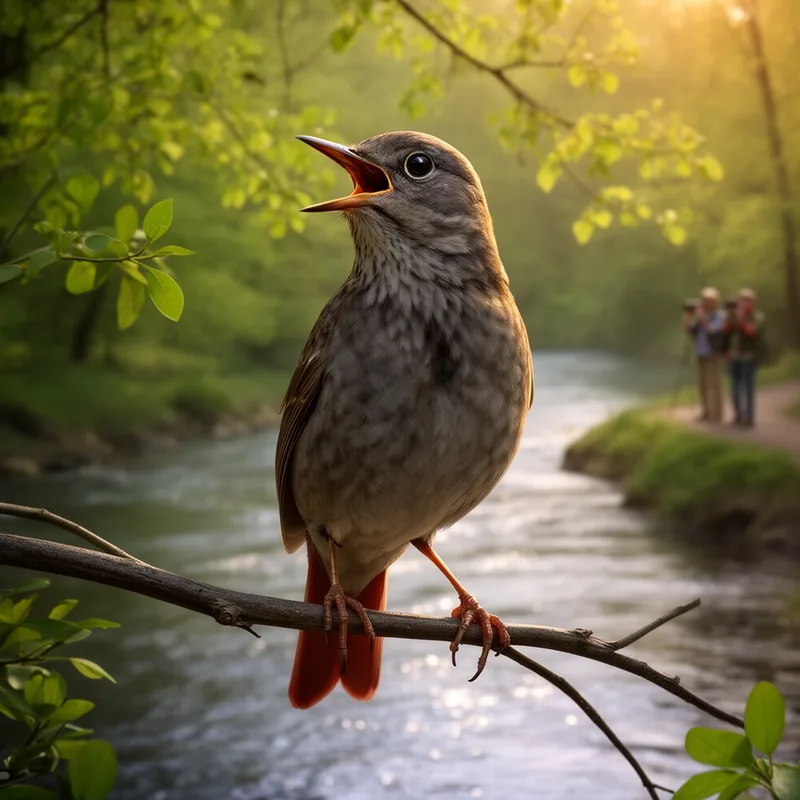
thrush nightingale
- noun
- /θrʌʃ ˈnaɪtɪŋɡeɪl/
- The thrush nightingale is admired for its rich and varied songs during the breeding season.
Examples
-
Birdwatchers travel to eastern Europe every spring to hear the thrush nightingale in its natural habitat.
-
Unlike the common nightingale, the thrush nightingale tends to have a grayer and less reddish plumage.
-
The thrush nightingale is known for its beautiful song.
-
Have you ever heard a thrush nightingale sing?
-
Birdwatchers travel to eastern Europe every spring to hear the thrush nightingale in its natural habitat.
-
The thrush nightingale is admired for its rich and varied songs during the breeding season.
-
Have you ever heard a thrush nightingale sing in the forest?
Synonyms
A large nightingale that sings loudly in eastern European forests
Surface Forms
Morphology
Both constituents are concrete bird names, so a B1 learner who knows 'thrush' and 'nightingale' can infer this is a type of bird (a nightingale related to or resembling a thrush, i.e. a larger/thrush-like nightingale). The meaning is literal and compositional, following normal English compound-noun formation, so it is predictable from the parts.
Etymology
Thrush nightingale comes from how the bird looks and sounds: it is a kind of nightingale that is larger and more like a thrush, so people used both names to show its thrush-like size and nightingale song. That's why thrush nightingale today means a large nightingale with a rich song found in eastern Europe.

