
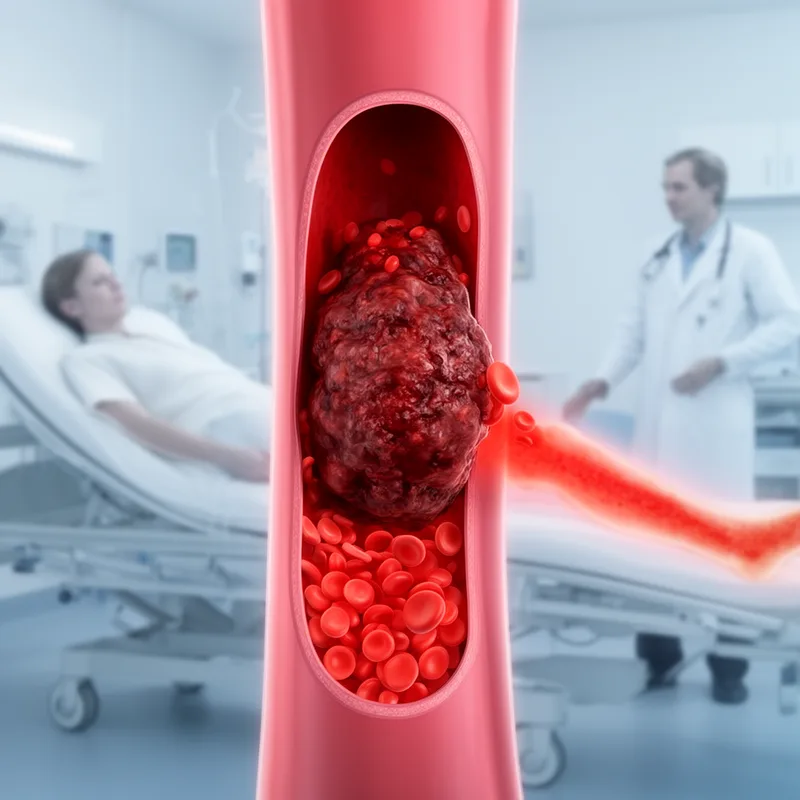
thromboembolic


 1
8.9
1
8.9
- adjective
- /θrɑmboʊˈɛmbəlɪk/
- Specialized
- None subsequently had venous thromboembolic events during the 3-month follow-up period.
- thromboembolic event
- thromboembolic disease
- thromboembolic complications
Examples
-
Thromboembolic events may also occur, leading to transient ischemic attack or cerebrovascular accident.
Academic text (2007) -
All patients should be assessed for the presence of antiphospholipid antibodies, which may predispose them to thromboembolic events such as pregnancy loss, deep vein thrombosis, or pulmonary embolus.
Academic text (2014) -
Active thromboembolic disease or past medical history of cardiovascular disease.
Academic text (2014) -
In the primary prevention studies, a previous thromboembolic event was identified as an important risk factor for thromboembolic complications even if it had occurred years before.
Academic text (1994) -
Right heart thrombi are a severe form of venous thromboembolic disease and justify diagnosis and treatment in emergencies.
Academic text (2007) -
Several studies have established the value of anticoagulation for the primary prevention of thromboembolic events in patients with non-rheumatic atrial fibrillation (NRAF).
Academic text (1994) -
Once detected, this can be treated with low-dose aspirin (in the absence of any thromboembolic events) or long-term warfarin if the patient has already experienced a DVT or PE.
Academic text (2014) -
In patients undergoing catheter ablation for atrial fibrillation, continuing warfarin reduced periprocedural thromboembolic events at 48 hours compared with interrupting warfarin.
Academic text (2014) -
Continuing warfarin reduced the risk for periprocedural thromboembolic events and minor bleeding compared with interrupting warfarin; groups did not differ for major bleeding or pericardial effusion (Table).
Academic text (2014) -
Patients with a history of heart disease are at higher risk for thromboembolic complications during surgery.
Synonyms
 1
6.8
1
6.8
Relating to a blood clot blocking a blood vessel
Surface Forms
Morphology
thromboembolic = embolic (opaque) = thrombo + embol + ic
The term is formed by medical combining forms (thrombo- + embol-) that are specialized and unlikely to be analyzable by an average learner.
Etymology
Thromboembolic comes from roots that mean 'clot' and 'plug': thrombo- means 'clot' and embol- (from embolus) means 'plug' or 'something inserted'. So thromboembolic describes a problem caused by a blood clot that plugs or blocks a blood vessel.