
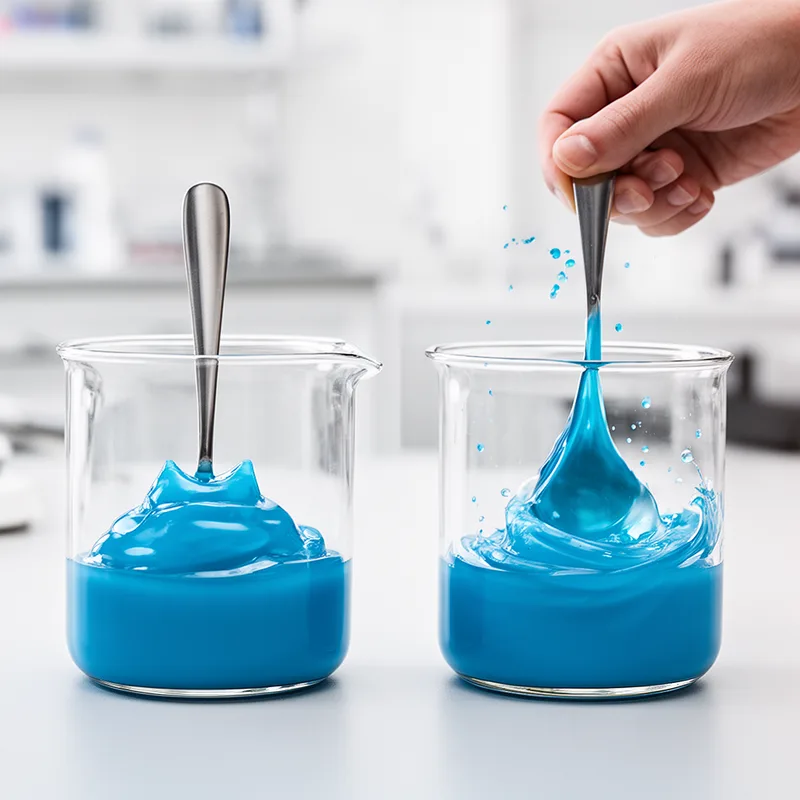
thixotropic


 1
9.9
- adjective
- /θɪkˈstrɒpɪk/
- Specialized
- VS2/VF2 mixtures are more likely to exhibit thixotropic effects, which may help to improve segregation resistance and limit the formwork pressure.
Examples
-
In construction, thixotropic materials help prevent flow during transport but are easy to manipulate when in use.
-
At rest, thixotropic materials behave like gels; in motion, they act like liquids.
Academic text (1999) -
A few years ago, the use of thixotropic metal slurries for making injection-molded parts was a mere laboratory curiosity.
Academic text (1999) -
It is a thixotropic fluid, and its viscosity goes down if it flows at high velocity or you shear it with counter-flowing gas or oil.
Blog text (17) -
A thixotropic fluid becomes less viscous when stirred and regains its thickness when still.
-
Thixotropic paints are easy to apply but thicken quickly if left undisturbed for too long.
Surface Forms
Morphology
thixotropic = thixotropy (opaque) = thixotropy + ic
The components are technical Greek combining forms unfamiliar to average learners, so knowing common English morphemes would not let a B1 learner deduce the meaning.
Etymology
The word thixotropic comes from Greek roots thix- meaning 'touch' and -tropic meaning 'turning'. So a thixotropic material 'changes when touched' because it becomes thinner when you stir or shake it and thickens again when left still.