
third rail
 4
7.7
4
7.7

- noun
- /θɜrd reɪl/
- Specialized
- Workers checked the third rail to ensure it was functioning properly before the trains resumed service.
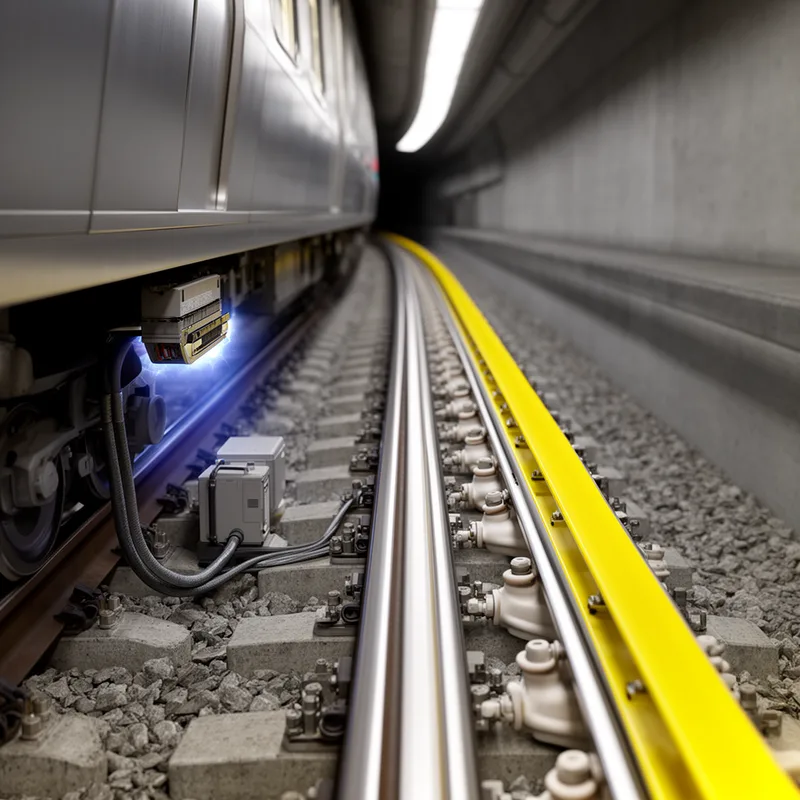
- electrified third rail
- electrified third rail
- sparks from the third rail
Examples
-
Passengers are warned to stay away from the third rail because it carries dangerous high voltage electricity.
-
Sometimes they would step on the third rail and get hit with several thousand volts of electricity.
Fiction book (2001) -
They looked carefully at the bottom surface of the third rail.
Fiction book (1992) -
An El racketed overhead, balanced precariously at the edge of the tracks, scraping blue sparks from the third rail.
Fiction book (1996) -
The authority cautioned riders that a suspension of service on its railroads did not imply that power would be cut to the third rail or overhead wires.
Blog text (33) -
In addition to collecting power from an overhead catenary system like the TGV, when traveling in England, Eurostar also collects power from a third rail.
Academic text (1993) -
The electric train relies on the third rail to receive power as it moves along the track.
Surface Forms
Morphology
The phrase is compositionally interpretable as ‘an additional (third) rail’ alongside the running rails, so a learner who knows 'third' and 'rail' can infer it refers to another rail. However, the specific technical function — that it carries electric current to power trains — is specialized and not directly predictable from the constituents, making the expression only partially transparent to a B1 learner.
Etymology
Third rail comes from train tracks: besides the two running rails there is a dangerous extra third rail that carries electric power. That's why the name refers to the metal rail that 'provides electricity' to electric trains and must not be touched.