

thiol


 1
8.3
- noun
- /θaɪˈɔl/
- Specialized
- To detect the presence of thiols, scientists use specific reagents that produce noticeable color changes.
- thiol-gold
- thiol oxidation
- thiol group
Loading YouTube…
Watch on YouTubeSo you don't want your thiol reactive probe to react with the reducing agent in the buffer here, OK.
- So you don't want your thiol reactive probe to react with the reducing agent in the buffer here, OK.
Examples
-
The degree of completion of the printed monolayer becomes less dependent on the geometry of the pattern, and diffusion of the thiols during printing is minimized.
Academic text (2001) -
Control over the amount of ink transferred was possible by changing the concentration of the thiol solution used for preparing the ink pad.
Academic text (2001) -
OK, now again, where have you seen this thiol disulfide system before?
-
Printed thiols on gold can be used as a resist in a subsequent etch process.
Academic text (2001) -
So you don't want your thiol reactive probe to react with the reducing agent in the buffer here, OK.
-
Keratin proteins are tough, insoluble compounds, which are composed of a tight network of disulfide bonds, courtesy of their high thiol content.
Academic text (2018) -
N-acetylcysteine (NAC), a thiol precursor of GSH, represents one potential therapeutic option.
Academic text (2016) -
The oxidation of critical thiol groups within a protein component of the mitochondrial permeability transition pore probably mediates the MPT process.
Academic text (2018) -
The thiol group in this compound gives it a strong, pungent odor.
-
Chemists often analyze thiols because they can react uniquely due to their sulfur-hydrogen bond.
Synonyms
 1
9.3
A smelly chemical added to gas to make leaks easy to notice
 1
9.3
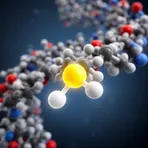
A part of a molecule with one sulfur atom and one hydrogen atom
Surface Forms
Morphology
thiol = thio + ol
The term is built from the specialist combining form 'thio-' (sulfur) and the chemical suffix '-ol' (alcohol); these technical morphemes are not productive or familiar to an average B1 learner, so the meaning is not derivable from common English vocabulary.
Etymology
Thiol comes from the Greek root thio- meaning 'sulfur' and the ending -ol, like in alcohol, so a thiol is the 'sulfur' version of an alcohol. They are chemicals with a sulfur–hydrogen group, which is why many thiols have a strong, unpleasant smell.