
thick skin
 3
4.2
3
4.2

- noun
- very thick skin
Examples
-
The heat did not penetrate the thick skin of his fingers.
Fiction book (2002) -
Crocodiles and alligators are notorious for their thick skin and well-armored bodies.
Blog text (2) -
The professor told everyone in the very beginning, "You're going to need a very thick skin to get through this class, and we're going to write short essays, but I'm going to read through every one of them and critique them completely."
Academic text (2013) -
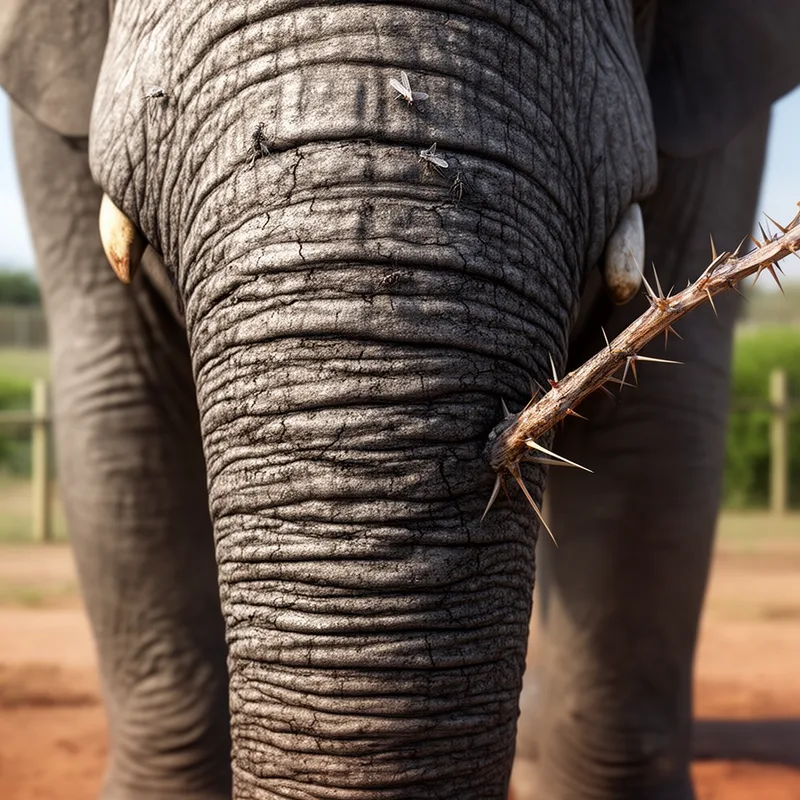
The elephant's thick skin protects it from harsh weather and predators.
-
Rhinoceroses have a thick skin that helps them survive in their natural habitat.
-
The zookeeper explained that the thick skin of the hippo is an adaptation for its environment.
Antonyms

How Thick
3
4.2


 1
4.9
1
4.9
Surface Forms
Morphology
The meaning 'physically very thick skin' is directly and compositionally derived from combining 'thick' (substantial width/density) with 'skin' (the body's external covering), so a B1 learner who knows both words can infer the meaning. This adjectival + noun pattern is cross-linguistically common and follows normal English composition, making the listed physical sense fully transparent (separate from the metaphorical 'thick-skinned' sense of emotional resilience).
Etymology
Thick skin comes from animals like elephants and rhinos whose skin is very thick and works like natural armor against thorns and insect bites. So saying an animal has 'thick skin' means its skin is physically strong and protective.