

theropod dinosaur


 1
9.3
1
9.3
- noun
- /ˈθɛrəˌpɒd ˈdaɪnəsɔr/
- Specialized
- The study will also allow scientists to generate predictions about the missing parts of an animal for which only partial fossil records exist. For example, we only have fossil evidence of the wing and tail of another theropod dinosaur related to M. gui.
Examples
-
Meet Spinosaurus aegyptiacus—the first theropod dinosaur found that sported a body better adapted to a life in the water than on land.
-
In the program, Liopleurodon was depicted attacking and devouring the theropod dinosaur just before becoming beached during a typhoon and suffocating under its own weight.
Blog text (2) -
Despite its modest size, broad wings, and inferred potential to fly or glide, Archaeopteryx has a lot more in common with modest theropod dinosaurs than it does with modern-day birds.
Blog text (2) -
Marasuchus, a basal theropod dinosaur (all of which are bipeds), may have inherited its bipedal abilities from a common ancestor with Scleromochlus.
Blog text (19) -
Birds are described as today's surviving theropod dinosaurs—two-legged predators characterized by large brains and stereoscopic vision.
-
Like many other theropod dinosaurs, it was equipped for life as a predator.
Synonyms
 3
9.9
3
9.9
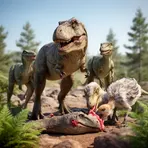
A mostly meat-eating dinosaur with short front legs and strong back legs that lived long ago, like Tyrannosaurus
 1
9.9
1
9.9
A dinosaur that eats meat and has short front legs and strong back legs for running
 1
9.9
1
9.9
A group of dinosaurs that ate meat and had short front legs

A group of meat-eating dinosaurs with short front legs from the Jurassic and Cretaceous
Surface Forms
Morphology
The phrase is compositionally transparent: 'theropod' identifies a subgroup and 'dinosaur' identifies the larger category, so a learner who knows both constituents can infer it means a dinosaur belonging to the theropod group. This subtype–superordinate noun combination follows a common cross-linguistic pattern for biological classification, making the meaning directly derivable from the parts.
Etymology
Theropod dinosaur comes from old Greek words: thero- meaning 'beast' and -pod meaning 'foot'. The picture of a 'beast-foot' — an animal with strong back legs for running and walking — helps explain why the name is used for the mostly meat-eating dinosaurs with short front limbs and powerful hind legs.