
thermophilic


 1
8.3
- adjective
- /ˌθɜrməˈfɪlɪk/
- Specialized
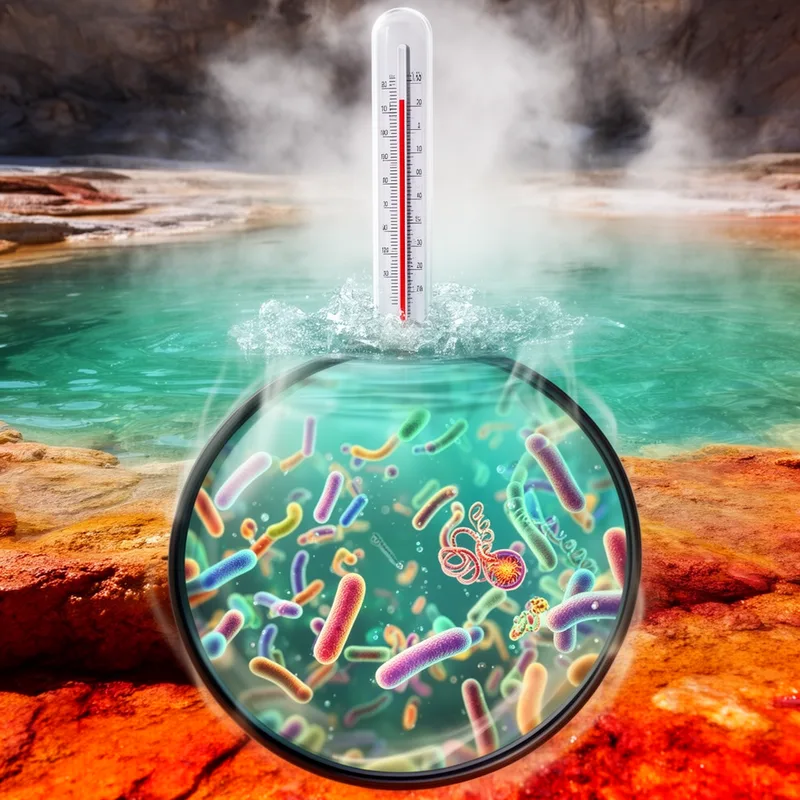
- Thermophilic bacteria can thrive in environments with temperatures above 45 degrees Celsius.
- thermophilic temperature
- thermophilic microorganisms
- thermophilic bacteria
Examples
-
Monitoring of the compost piles indicates that the mixture rapidly attains thermophilic temperatures (140 Fahrenheit to 165 Fahrenheit) within 24 to 48 hours.
Academic text (2001) -
Not unexpectedly, thermophilic fungi are highest during the active composting phase.
Academic text (1996) -
Although temperatures climbed, they never got hot or into the thermophilic ranges.
Academic text (1999) -
Some years, more mesophilic plants are added, while during other years, more thermophilic capacity is constructed.
Academic text (2000) -
The windrows are turned three to four times a week during the thermophilic stage and as little as once per week thereafter.
Academic text (2001) -
Experiments show that the thermophilic phase must be maintained for 3 to 11 days to produce a Class A biosolid.
Academic text (2002) -
The first thermophilic plants were dry fermentation plants and came online in 1992 and 1993.
Academic text (2000) -
In addition to exploiting T. aquaticus, scientists have found industrial uses for at least eight other thermophilic species.
Academic text (1996) -
On the other hand, thermophilic temperatures were maintained in both systems for enough time to permit effective pathogen elimination.
Academic text (2001) -
Cetus scientists thought that a thermophilic microorganism might rectify this problem.
Academic text (1996)
Antonyms

How Heat-Tolerant

Surface Forms
Morphology
thermophilic = thermophile (semi-transparent) = thermo + phil + ic
The immediate step from thermophile to thermophilic is a regular adjectival suffixation with -ic, though the base word itself is technical.
Etymology
Thermophilic breaks down into thermo- meaning 'heat' (as in thermometer) and -philic meaning 'loving' or 'liking', so it gives the image of 'loving heat'. So a thermophilic organism is one that can live, grow, or work at very high temperatures.