
theophanic
- adjective
- /θiˈɑːfənɪk/
- Specialized
 :
teofánico
:
teofánico
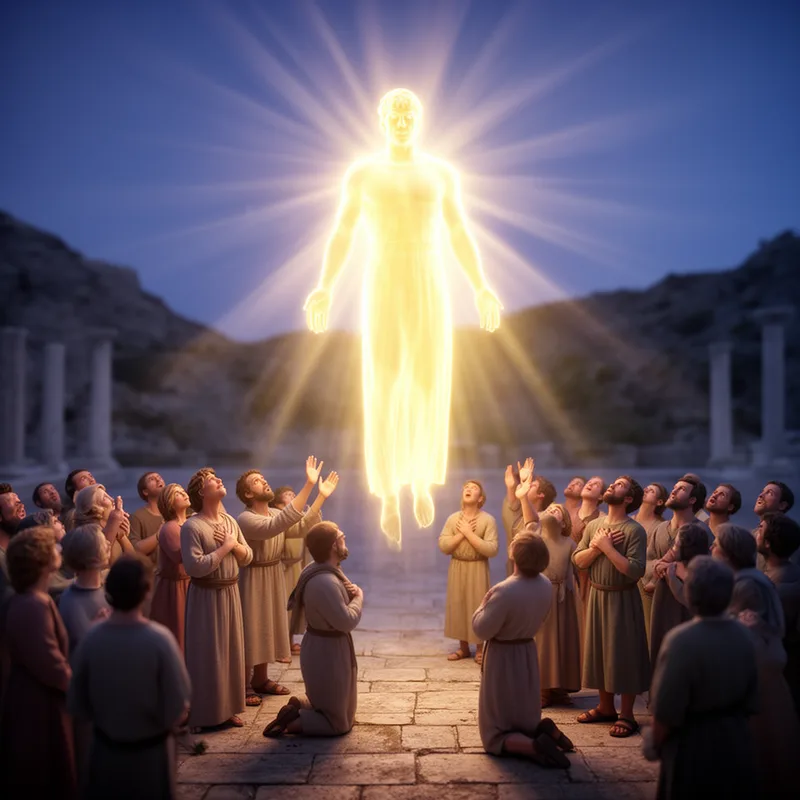
- Many religious texts describe theophanic events where God appears in the form of fire or light.
Examples
-
He considered the theophanic apparitions—the light, the glory, the visions—as created phenomena, produced by angelic manipulation of matter.
Academic text (2007) -
The elusiveness of the written form of revelation is also illustrated by the theophanic passages that struggle to convey in words the human experience of the divine.
Academic text (2006) -
The painting depicted a theophanic moment when the deity revealed itself to the prophet in brilliant colors.
-
During the ceremony, attendees witnessed a theophanic experience that left them feeling a profound sense of awe.
Synonyms

 218
5.3
218
5.3

Relating to God or a god
 12
7.9
12
7.9
Very powerful and perfect, like a god
 5
6.3
5
6.3
Coming from God or having a sacred quality

Having the qualities of a god
Antonyms


Surface Forms
Morphology
theophanic = theophany (semi-transparent) = theo + phany + ic
The adjective is a standard adjectival formation from the noun 'theophany' (relating to a divine manifestation).
Etymology
The word theophanic comes from Greek parts theo- meaning 'god' and phanein meaning 'to show' or 'appear', and you can see the same idea in epiphany. So a theophanic event is one that 'shows' a god or feels like a god is present.