

the street
 ∞
3.4
∞
3.4

- noun
- /ðə strit/
- The children rode their bikes happily in the street after school.
- walk down the street
- take to the streets
- people on the street
Loading YouTube…
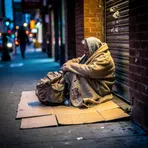
Watch on YouTubeAnd there was a woman living on the street as we walk by.
- And there was a woman living on the street as we walk by.
- But when you're right by that person sitting on the street, he looks familiar.
- He's sitting on the street asking people for food.
- Like I walk down the street, everyone knows me, right?
Examples
-
When we have the grandkids, they play in the street and the neighbors' yards.
Academic text (2011) -
And we're right down the street here.
-
Worked at the bar up the street from my house.
-
And down the street from me was a housing project.
-
You can get a cup of coffee at the hotel across the street there.
-
"Nobody speaks it at home," he wrote, "in school, on the streets, or in clubs."
Academic text (2011) -
Most of them played out in the street or at dances and house parties?
Academic text (1999) -
You wake up tomorrow morning and you're on the street and you have nothing.
-
What if we didn't know each other, and we saw each other on the street?
-
I spend a lot of time peeking out at the street, hidden behind my drapes.
Fiction book (1990)
Synonyms
 ∞
6.4
∞
6.4
A place where people live without a home in a city
Antonyms

How Urban

Surface Forms
Morphology
the + street
This sense is a metonymic extension of the literal 'street' (the physical road) to mean the urban environment or the community/people associated with it. A B1 learner who knows 'street' and 'the' can often infer a general urban/community sense, but the figurative/community nuance is not fully literal and may require exposure to usage to be reliably understood.
Etymology
The street comes from a simple image: people living, working and making music right on a town or city street, with market stalls, singers and children all in public view. So the street came to mean the whole 'urban environment' or 'community' — the everyday life and culture of ordinary people.