

to thaw out
 4
2.3
4
2.3

- phrasal verb
- /θɔː aʊt/
- To enjoy the soup, you should thaw out the frozen container in the fridge overnight.
- thaw out the ice
Loading YouTube…
Watch on YouTubeThey're going to maybe even die until that soil thaws out.
- They're going to maybe even die until that soil thaws out.
- You get you know, you it's too late to thaw out something.
Examples
-
Use your refrigerator to thaw out food.
Blog text (11) -
I need to thaw out the chicken before I can cook it.
-
Into the kitchen, son, and thaw out some ice.
-
I thawed out some raspberries.
Fiction book (1991) -
So let's go ahead and thaw out the second batch of algae.
-
The florist had to thaw out our newly planted tulips with a hair dryer.
-
Your client explains to you that some of the freezers that held frozen turkeys had broken down, causing some of the frozen turkeys to thaw out.
Academic text (2008) -
If you leave the ice cream on the counter, it will thaw out and become too soft.
Synonyms
 65
1.1
65
1.1
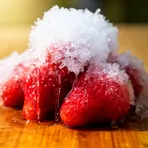
To become soft and melt after being frozen or make something melt
 20
1.7
20
1.7
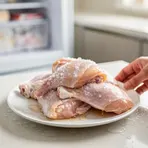
Make ice melt or remove ice from something
 2
3.5
2
3.5
Make something that is frozen become soft or liquid
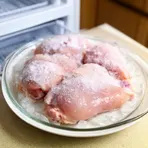
To make something frozen become soft or liquid by warming
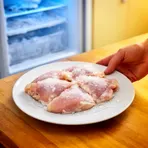
To make something frozen melt by warming it
Antonyms

How Melted
362
1.0
 4
2.3
4
2.3
Surface Forms
Morphology
The meaning 'to become unfrozen / make something unfrozen' is directly derivable from 'thaw' (to melt) plus the particle 'out', which here signals movement to an unfrozen/outward state or completion. This is a regular verb+particle compositional pattern in English, so a B1 learner who knows both constituents would readily infer the MWE's meaning.
Etymology
Thaw out comes from the simple image of something frozen warming until the ice melts. When heat reaches frozen food, the ice inside melts and the thing thaws — thaw plus out suggests the warming is complete, so it 'becomes unfrozen' and ready to use.