
thallophyte
- noun
- /ˈθæl.ə.faɪt/
- Archaic
- Fungi are often classified as a type of thallophyte because they lack true roots, stems, and leaves.
Examples
-
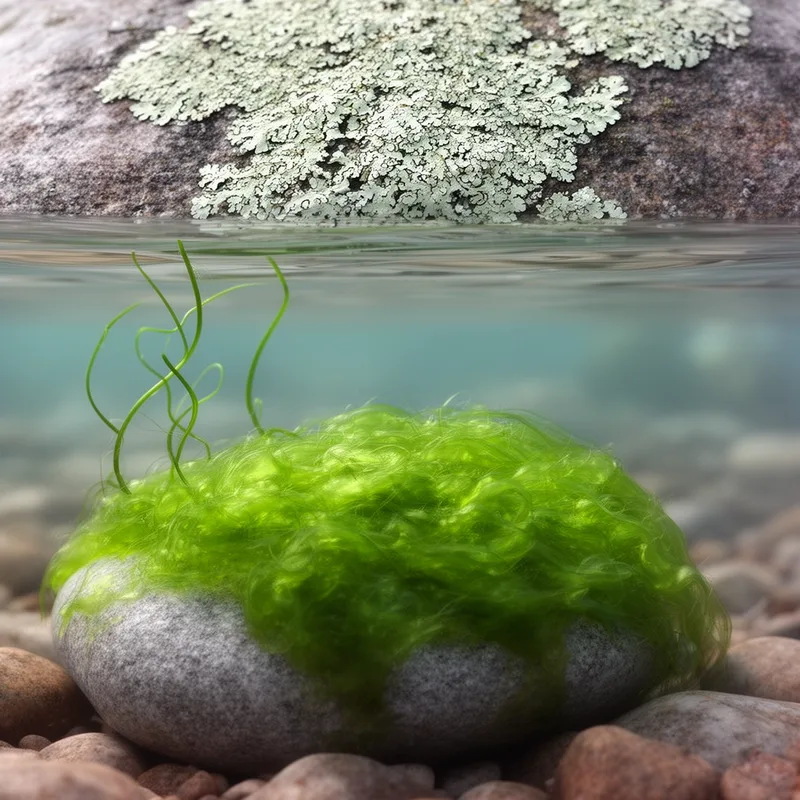
The textbook included diagrams of various thallophytes, such as certain algae and lichens.
-
Scientists studied the thallophyte samples collected from the lake to understand aquatic ecosystems.
-
A thallophyte is a simple organism without true stems.
-
Many thallophytes can be found in aquatic environments.
-
Fungi are often classified as a type of thallophyte because they lack true roots, stems, and leaves.
-
Scientists studied the thallophyte samples collected from the lake to understand aquatic ecosystems.
-
The textbook included diagrams of various thallophytes, such as certain algae and lichens.
Surface Forms
Morphology
Etymology
Thallophyte comes from Greek parts thallo- meaning 'young shoot' or 'green shoot' and -phyte meaning 'plant'. So a thallophyte is a 'plant' with a simple body and no true stems, roots, or leaves, which is why the word is used for algae, fungi, and lichens.

