
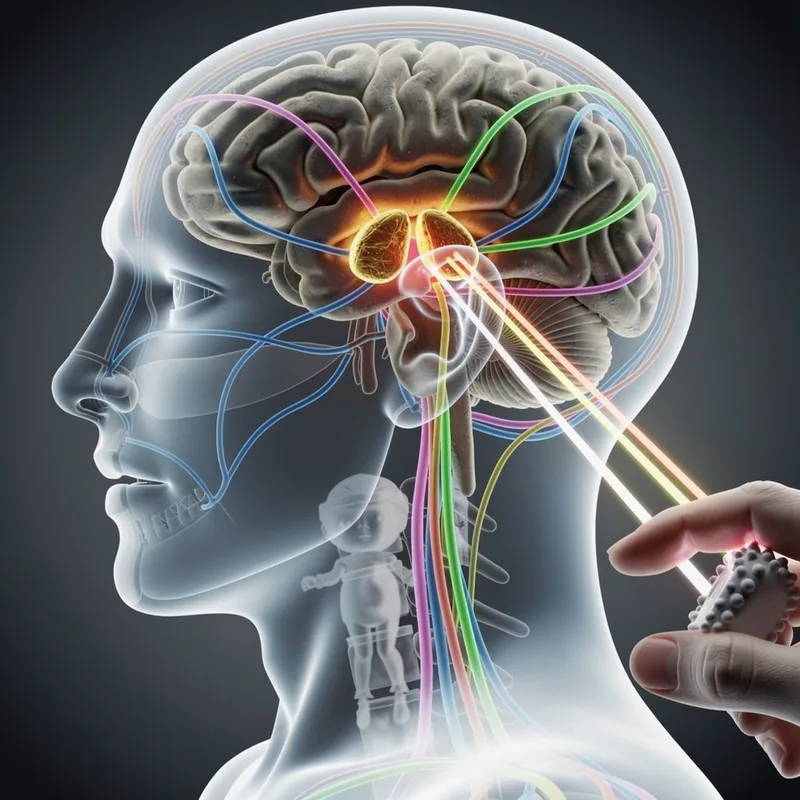
thalamus
 5
8.8
5
8.8

- noun
- /ˈθæləməs/
- Specialized
- The thalamus acts as a relay center, directing sensory information to the proper areas of the brain.
- thalamus and hypothalamus
- brain and thalamus
- thalamus and cortex
Loading YouTube…
Watch on YouTubeThe neurons of the thalamus are the gatekeepers between mind and body.
- The neurons of the thalamus are the gatekeepers between mind and body.
- They pass and ascend up some tracks in our brain up into the thalamus.
- And the fibres that came through as changing the ones that travelled between the prefrontal cortex and and the thalamus and the striatum.
- This is brain stem, thalamus and then cortex for for those of you that are interested, although more of that is going to occur in REM sleep.
- The the the sequence of events seem to have the thalamus in it.
- Is this part thing where you can somewhat respond to the world around you because there are parts of your thalamus that's not closed.
- Could be within the eye, but more technically it's going to be done within the deeper brain, OK, Areas like the thalamus, the visual cortex for those that want to know.
Examples
-
Damage to the thalamus can disrupt the transmission of motor signals to the body.
-
Move it around until it locates the thalamus.
-
Those get their inputs primarily from these cell groups in the thalamus, ventral nucleus.
-
The neurons of the thalamus are the gatekeepers between mind and body.
-
Of critical importance here is the connection of neural pathways through the thalamus to the neocortex.
Academic text (1990) -
Damage to the thalamus and hypothalamus can also hurt memory, as, for example, in Korsakoff's syndrome where alcohol plays a destructive role.
Academic text (1990) -
The thalamus and hypothalamus regulate body temperature, blood pressure, heartbeat, it regulates hundreds of hormones into the bloodstream.
-
This subcortical system consists of the brain stem's reticular activating system, thalamus, hypothalamus, and basal ganglia.
Academic text (1997) -
Researchers study the thalamus to understand its role in processing sensory signals and coordinating responses.
Surface Forms
Etymology
The word thalamus comes from the old Greek word thálamos, meaning 'inner room' or 'bedroom'. The thalamus is like a 'chamber' in the middle of the brain that sends and receives signals to other parts, which is why it acts as a relay station.