
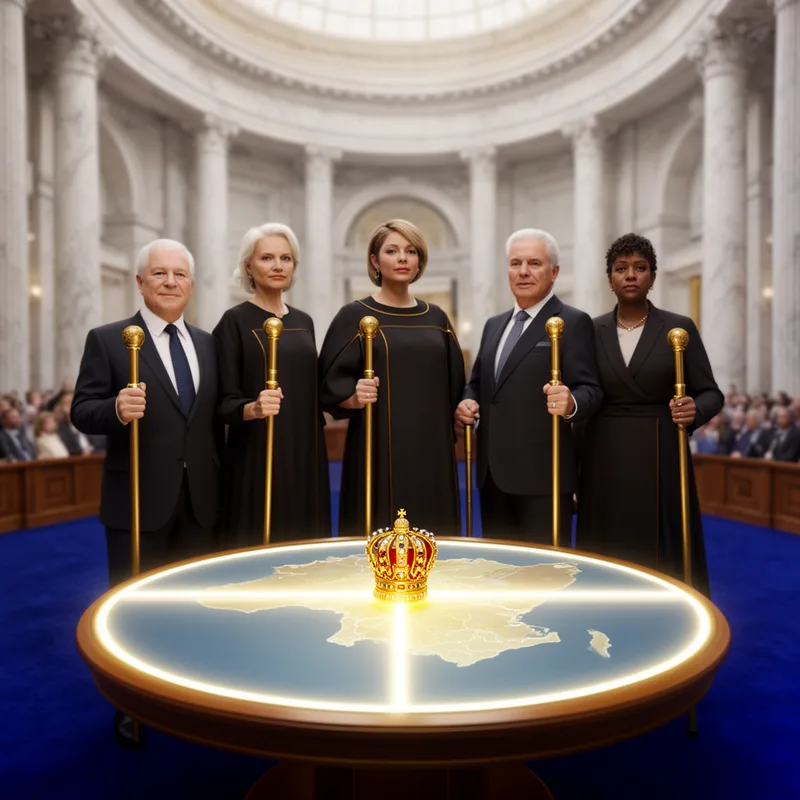
tetrarchic


 1
9.9
- adjective
- /ˌtɛtrɑːrˈkɪk/
- A tetrarchic arrangement can help prevent the concentration of power in one individual.
Examples
-
Historians often debate the effectiveness of tetrarchic governance in ancient times.
-
The tetrarchic system divided the Roman Empire among four co-rulers to improve stability.
-
The tetrarchic system was established in ancient Judea.
-
In a tetrarchic government, power is shared among four leaders.
-
The tetrarchic system allowed for a more balanced governance by dividing power among four leaders.
-
In ancient times, the tetrarchic rule helped to stabilize regions by sharing authority between notable figures.
-
The council was known for its tetrarchic decisions, as it involved contributions from all four leaders.
Synonyms
 1
9.9
Having four different parts or groups
Surface Forms
Morphology
Etymology
Tetrarchic comes from Greek parts tetra- 'four' and -arch 'rule', the same -arch you see in monarch and anarchy. So, a tetrarchic system is a government 'ruled by four' leaders.