
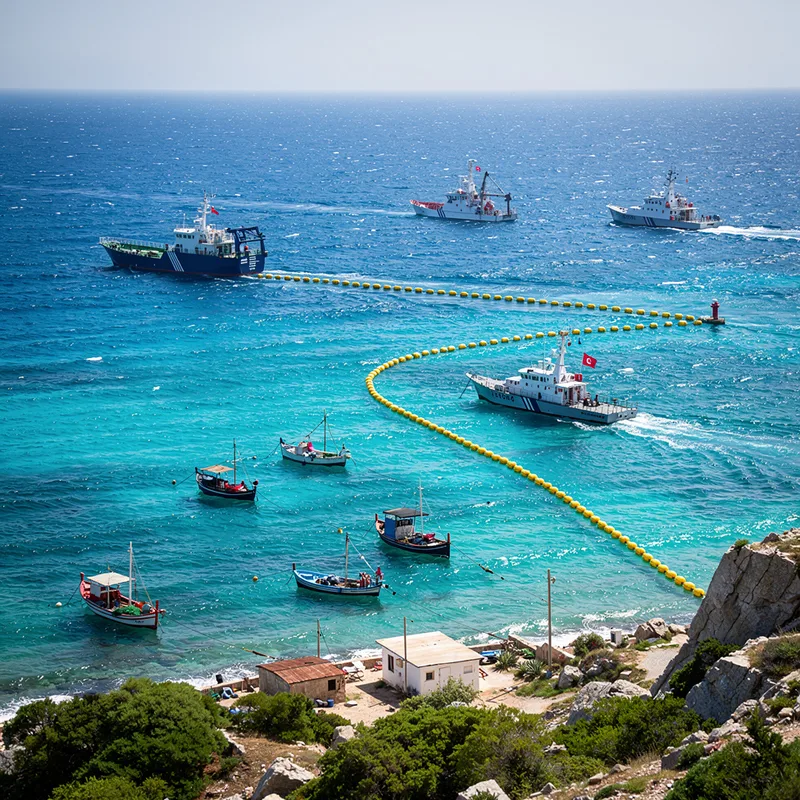
territorial waters
 6
4.9
6
4.9

- noun
- /ˌtɛrɪˈtɔriəl ˈwɔtərz/
- Specialized
- The coast guard is responsible for patrolling the country's territorial waters to prevent illegal fishing.
- the territorial waters of a country
Loading YouTube…
Watch on YouTubeSo they were skirting the territorial waters of other countries.
- So they were skirting the territorial waters of other countries.
Examples
-
The coast guard warned the ships not to enter Japan's territorial waters, but the four surveillance ships ignored this order.
Blog text (1) -
So they were skirting the territorial waters of other countries.
-
You are in Chinese territorial waters.
-
The territorial waters of the country are rich in fish and seafood products.
Academic text (1992) -
We're drifting due north, and straight into Iranian territorial waters.
-
We're twelve miles off the coast because I can't risk sailing through Chinese territorial waters.
-
Inside territorial waters, such crimes constitute armed robbery at sea and are the responsibility of the coastal state.
Academic text (2009) -
Han's island rests partly within our territorial waters.
-
In addition, many Pacific island states receive income from licensing fees paid by foreign-operated fishing boats for access to their territorial waters.
Academic text (2005) -
Israel controls the airspace and territorial waters around Gaza and routinely makes illegal incursions across its borders.
Blog text (13)
Antonyms

How Wide
17
3.4

- Specialized
6
4.9
Surface Forms
Morphology
The meaning 'area of sea under a country's jurisdiction' is directly and compositionally built from 'territorial' (pertaining to a territory) + 'waters' (sea area), so the phrase's sense is predictable from its parts. This noun phrase structure and the idea of national maritime zones are cross-linguistically common, so a B1 learner who knows both constituents would very likely understand it.
Etymology
The name territorial waters shows its parts: territorial means the land of a country and waters means the sea, so imagine a band of sea next to the coast treated like the country's 'territory'. So the phrase means the area of sea a country 'controls' near its shore.