
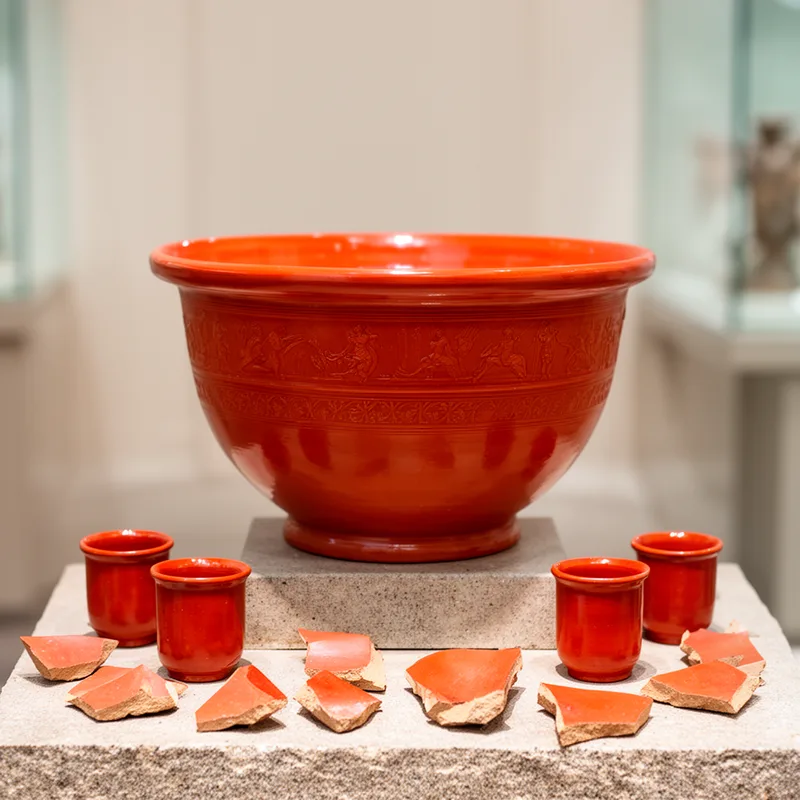
terra sigillata
- noun
- /ˈtɛrə sɪˈdʒɪlətə/
- Specialized
- Many of the decorative dishes in the museum are made from terra sigillata, showcasing the vibrant red color typical of this pottery.
Examples
-
Through extensive experimentation over the past three decades, the ceramicist Magdalene Odundo has perfected the use of a marl-rich terra sigillata to create her ceramics.
Academic text (2009) -
The ancient Romans preferred to use terra sigillata for their pottery because of its glossy finish.
-
In archaeological digs, terra sigillata fragments are often found, revealing insights into Roman craftsmanship.
Synonyms

 3
6.6
3
6.6

Pottery made from clay and baked at low heat, often with a shiny layer

A fine shiny red Roman pottery often seen as bowls or plates at ancient sites
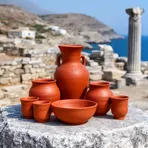
Pottery made from reddish-brown clay on the Greek island of Lemnos in ancient times

Objects made from clay and baked until hard, like pots and bowls
Surface Forms
Morphology
terra + sigillata
This is a borrowed Latin technical term used in archaeology: while 'terra' means 'earth', 'sigillata' is not a common English word and its meaning ('stamped'/'sealed' in Latin) is not transparent to a B1 learner. The compound refers to a specific class of Roman red-gloss pottery, a specialized meaning that cannot be derived from the surface meanings of the parts, so it is opaque to learners.
Etymology
Terra sigillata: The name terra sigillata comes from the Latin words terra meaning 'earth' and sigillata meaning 'sealed', and may come from the small seals potters pressed into soft clay before firing. Those stamps and the smooth, shiny red layer on the pots give the image of clay that is 'sealed', so the term now refers to that fine, glossy red pottery.