
teratogen


 1
9.9
- noun
- /ˈtɛrəˌtoʊdʒən/
- Specialized
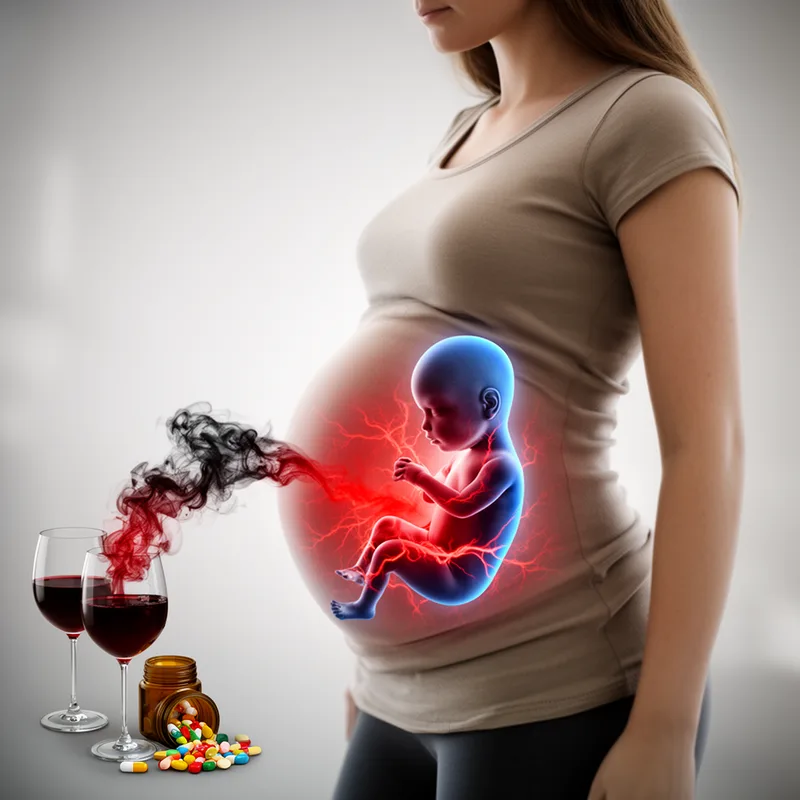
- Thalidomide, a drug approved for marketing in various European countries, was discovered to be a teratogen, an agent that can cause malformations of an embryo or fetus.
Examples
-
And then shortly after its widespread consumption, it was found that this is a teratogen and it produces hideous birth defects.
-
Teratogen exposure during weeks 3 through 10 can result in impaired organogenesis.
Academic text (2003) -
Now we know better, and as a species we're smarter as a result; we're aware of teratogens.
Fiction book (2001) -
Unfortunately, the medication was a pretty serious teratogen; it caused severe birth defects.
Blog text (26) -
Methotrexate is a human teratogen, so it is absolutely contraindicated in pregnancy.
Academic text (2012) -
Alcohol is a teratogen.
Blog text (25) -
Although alcohol was recognized as a teratogen in 1973, it was not until 2002 that the CDC began developing diagnostic guidelines for FAS and FASD (Williams, Smith & Committee on Substance Abuse, 2015).
Academic text (2016) -
Certain medications can act as teratogens, leading to serious birth defects in developing fetuses.
-
Exposure to environmental teratogens during pregnancy can affect the health of the unborn child.
-
Pathogens and harmful substances can be classified as teratogens that disrupt normal fetal development.
Surface Forms
Morphology
teratogen = terat + gen
The term is built from specialized Greek combining forms ('terat-' + '-gen') that are not productive standalone English words, so learners cannot reliably infer the meaning from common vocabulary knowledge.
Etymology
The word teratogen comes from Greek parts terato- from teras meaning 'monster' and -gen meaning 'to produce', the same root as generate and gene. So a teratogen is something that 'produces monsters', which is an easy way to remember that it causes abnormal development in an embryo or fetus, a baby before birth.