
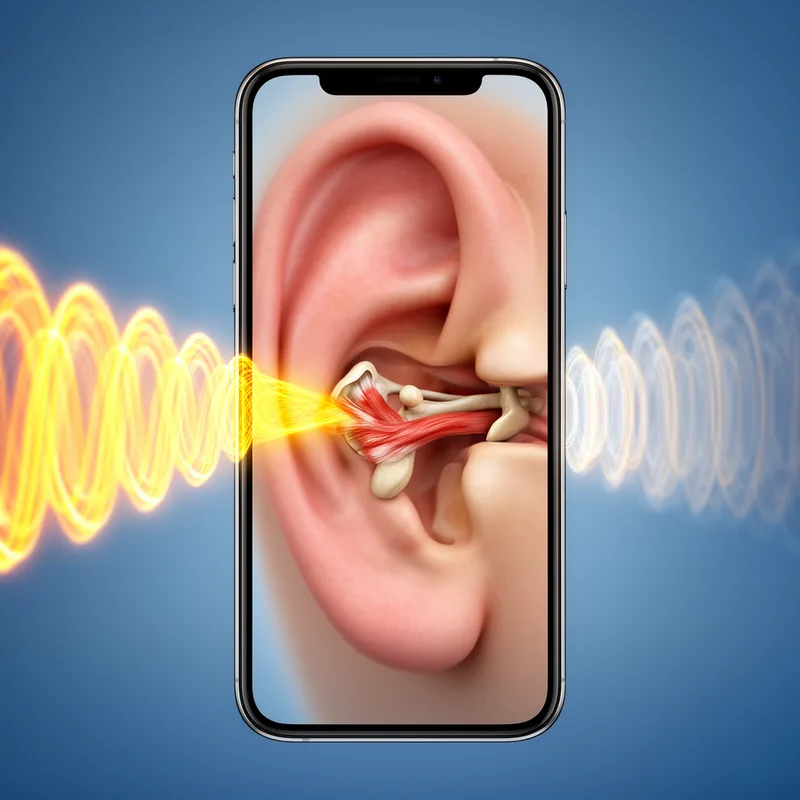
tensor tympani
- noun
- /ˈtɛn.sər ˈtɪm.pə.ni/
- Specialized
- The tensor tympani is a small muscle in the middle ear that helps protect the eardrum from loud sounds.
- tensor tympani and stapedius
Examples
-
In a cat, both the tensor tympani muscle and the stapedius muscle contract simultaneously in response to loud auditory stimuli.
Academic text (1998) -
It turns out when the muscles contract both the stupedius and the tensor tympani, they affect low frequencies to a much greater extent than highs.
-
However, Klochoff conceded that tenotomy of the tensor tympani may be necessary as an alternative treatment.
Academic text (1998) -
We then sectioned the stapedius and tensor tympani tendons.
Academic text (1998) -
A tensor tympani or the on-off otosclerosis reflex was found in six patients.
Academic text (1995) -
Sectioning of the stapedius and tensor tympani tendons rendered the patient asymptomatic and confirmed the diagnosis of middle ear myoclonus.
Academic text (1998) -
When exposed to a sudden loud noise, the tensor tympani contracts to dampen the sound and prevent damage.
-
In humans, the tensor tympani works together with other muscles to reduce the impact of loud auditory stimuli.
Surface Forms
Morphology
tensor + tympani
The meaning 'a muscle that tenses the tympanum' is directly and predictably built from 'tensor' (a muscle that makes a region taut) plus 'tympani' (relating to the tympanum/eardrum). Although the term is technical and uses Latin morphology that is uncommon at B1, if a learner knows both constituent meanings the overall expression is compositional and therefore transparent.
Etymology
Tensor tympani comes from Latin words: tensor meaning 'tightener' and tympani meaning 'drum'. So, the name fits the muscle: it tightens to protect the 'drum' or 'eardrum' from loud sounds.

