
telomeric
 2
9.3

- adjective
- /tɪˈloʊmɪrɪk/
- Specialized
- Rather, if a mutation or break occurs that shortens their telomeric repeats, then fusion is much more likely.
- telomeric repeat
Examples
-
What percentage of "junk DNA," which makes up about 97% of our genome, is represented by telomeric sequences?
Blog text (26) -
Again, chromosomes with full-length telomeric regions are less likely to fuse.
Blog text (26) -
The problem with telomeric rejuvenation is that the risk of developing some exotic, incurable cancer becomes much greater.
Fiction book (2000) -
Chromosomes with shortened telomeric regions are more likely to fuse.
Blog text (26) -
Luskin has no evidence that full-length telomeric regions fuse as easily as shortened telomeric regions.
Blog text (26) -
But the alleged fusion point in human chromosome 2 contains far less telomeric DNA than it should if two chromosomes were fused end-to-end.
Blog text (26) -
As Zimmer and Dave Wisker have pointed out, chromosomes with full-length telomeric regions are not likely to fuse.
Blog text (26) -
Recent studies have suggested that telomeric/subtelomeric regions are highly polymorphic and might encode putative virulence factors (33, 34).
Academic text (2013) -
Double-stranded regions of the telomeres are recognized by proteins containing Myb-like domains, conferring specificity toward telomeric repeats.
Blog text (15) -
The telomeric regions ensure that the genetic material is protected during cell division.
Synonyms
 9
9.5
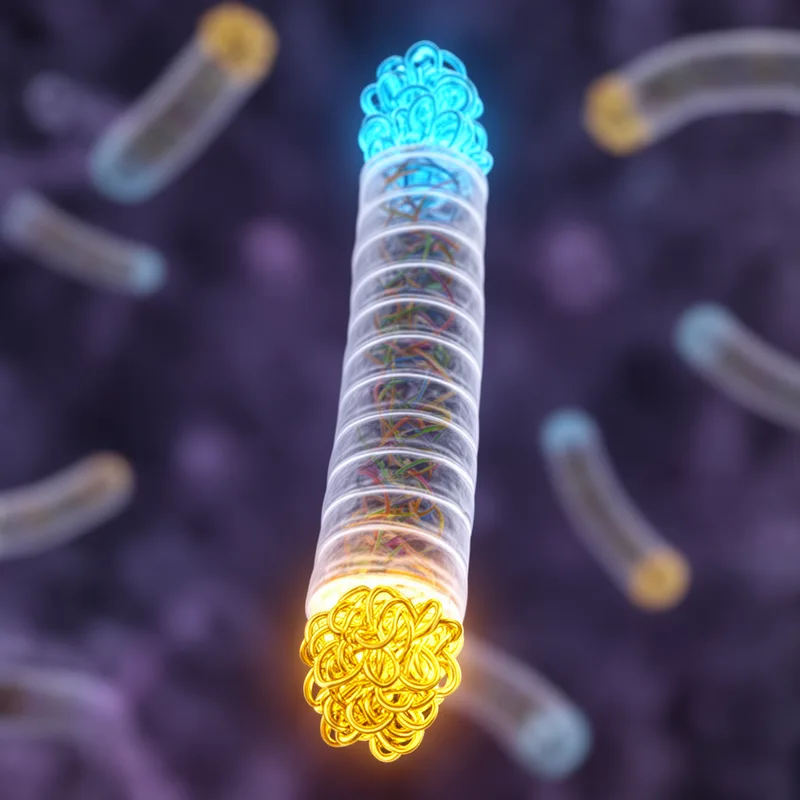
A short part at the end of a chromosome that protects it from damage and sticking to other chromosomes
Surface Forms
Morphology
Etymology
Telomeric comes from the Greek roots telos 'end' and meros 'part', so it literally means 'end part'. So telomeric describes the end parts of chromosomes that help protect the genetic material.