
telomere
 9
9.5

- noun
- /ˈtɛləˌmɪr/
- Specialized
- Research indicates that shorter telomeres can lead to a higher risk of age-related diseases.
- telomere shortening
- to shorten telomeres
- telomere biology
Loading YouTube…
Watch on YouTubeSo with enough replications of that DNA, those telomeres get shorter, smaller.
- So with enough replications of that DNA, those telomeres get shorter, smaller.
- The result was that mice have very long telomeres, but they do not have very long lives.
- The the most well established thing is the what do you call the stuff at the end of chromosomes, telomeres.
- So there's, there's a little cap on your cells called a telomere and it shortens over time and it shortens faster in people who are lonelier.
- That's where they have been studied as well as we've studied them in mice which we create that have short telomeres.
- And how what is the relationship between all of that and this conversation around declining telomere links and how that impacts our aging?
- Just little assholes who go into the cell and they begin to mess up the telomeres, the longevity, the cell division, the condition thereof.
Examples
-
The sequences at the ends of eukaryotic chromosomes, called telomeres, are composed of hundreds or thousands of short DNA repeats.
Academic text (1998) -
In the early 1990s, several observations solidified the link between telomere shortening and aging.
Academic text (1998) -
"I needed a sample from you, one taken straight after the telomere treatment."
Fiction book (2000) -
The result was that mice have very long telomeres, but they do not have very long lives.
-
At my company, our research on telomere extension has reversed the chromosomal clock of human stem cells.
-
The buffering effect of exercise on telomere shortening was confirmed again just last year.
Blog text (15) -
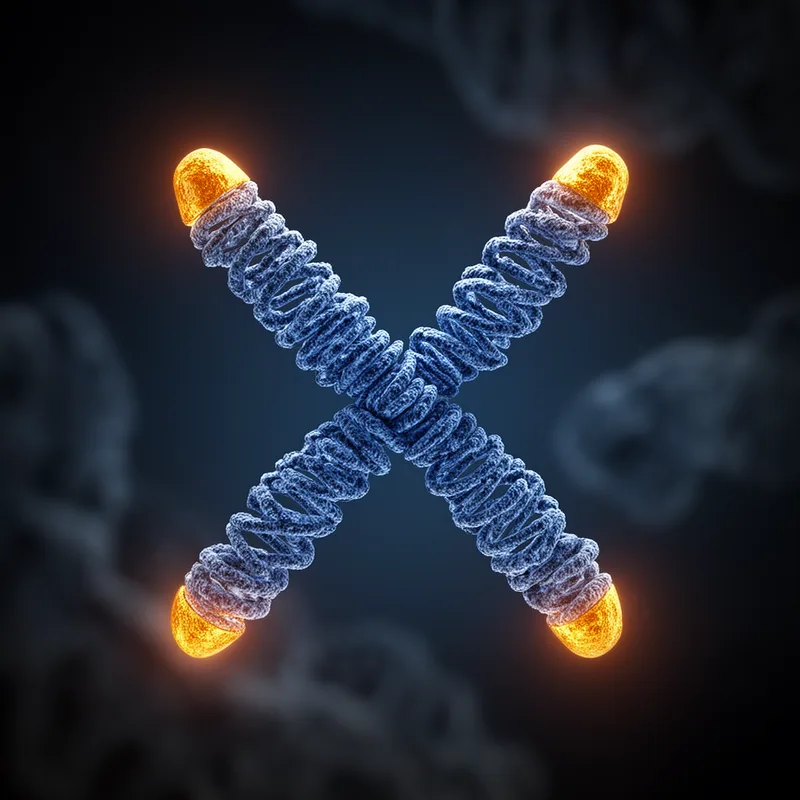
So our telomeres are those little caps at the end of our chromosomes.
-
The telomeres protect the ends of our chromosomes, preventing them from deteriorating over time.
-
Each time a cell divides, the telomeres shorten, ultimately affecting cellular aging.
Synonyms
 2
9.3
Have to do with the ends of chromosomes that protect genes
Surface Forms
Morphology
telomere = telo + mere
Formed from Greek combining forms ('telo-' = end, '-mere' = part) that are not standalone English words and the term is specialist vocabulary, so an average B1 learner cannot reliably derive the meaning from the parts.
Etymology
Telomere comes from Greek parts telo- meaning 'end' and -mere meaning 'part', and the -mere is the same 'part' you see in polymer (many parts). A telomere is therefore the 'end part' of a chromosome that protects the chromosome's tips, so the origin helps explain its protective role.