
teleost fish


 1
7.4
1
7.4
- noun
- /ˈtɛliˌɔst fɪʃ/
- Specialized
- Scientists study teleost fish to understand their unique adaptations and evolution.
Examples
-
Teleost fish have two or more proglucagon genes composed of four or six exons.
Academic text (2006) -
In the aquarium, you can see colorful teleost fish swimming gracefully through the water.
-
The ocean is home to many species of teleost fish, which are known for their diverse shapes and sizes.
Synonyms
 1
9.9
1
9.9
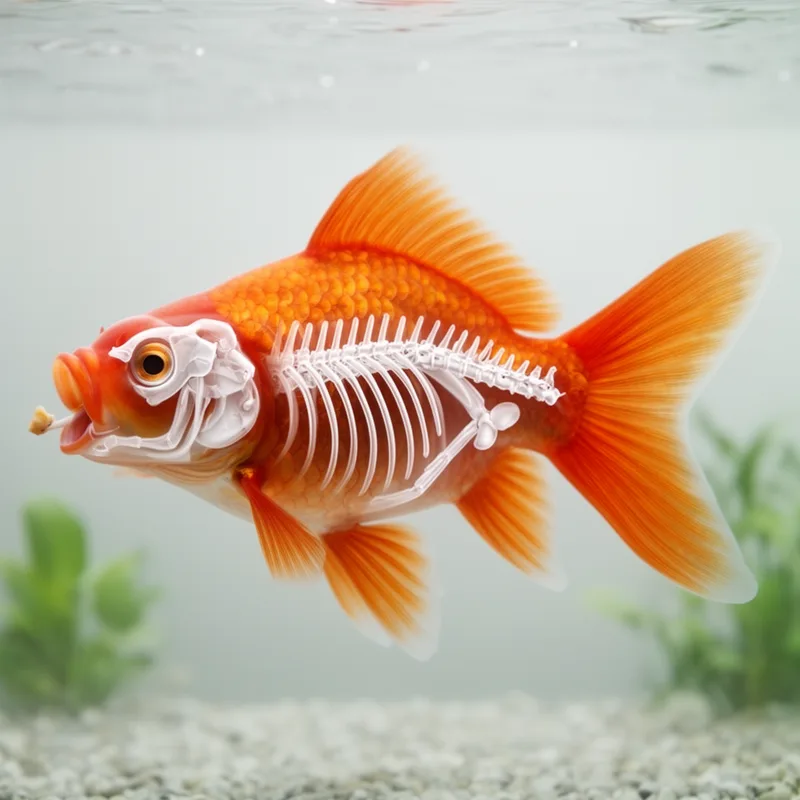
A fish with a bony skeleton, like trout or salmon
 1
3.7
1
3.7
A fish with a skeleton made mainly of bone, like a salmon or goldfish

A fish with bones like a trout or goldfish that has a movable jaw

A large group of fish with bones that includes most living fish

A group of fish with skeletons made mostly of bone
Surface Forms
Morphology
The phrase is fully compositional: 'teleost' denotes a subclass of fish, so 'teleost fish' simply means 'a fish belonging to the Teleostei.' This subtype-specifying noun+noun structure is a common, transparent pattern cross-linguistically, so a B1 learner who knows both constituents would readily derive the meaning.
Etymology
The name teleost fish may come from old Greek words teleios 'complete' and osteon 'bone', which gives a simple picture of a fish with a solid bony skeleton and a strong jaw. That's why the name now refers to the many modern bony fish with a well-developed backbone and jaw.