
tautochrone


 1
9.9
- noun
- /ˈtɔːtəˌkrōn/
- Specialized
- Engineers sometimes refer to the tautochrone when designing efficient paths for moving objects.
Examples
-
The cycloid is a well-known example of a tautochrone studied in mathematics.
-
In physics, the tautochrone problem explores how objects move along certain curves.
-
The tautochrone is a fascinating concept in physics.
-
Have you heard about the tautochrone curve?
-
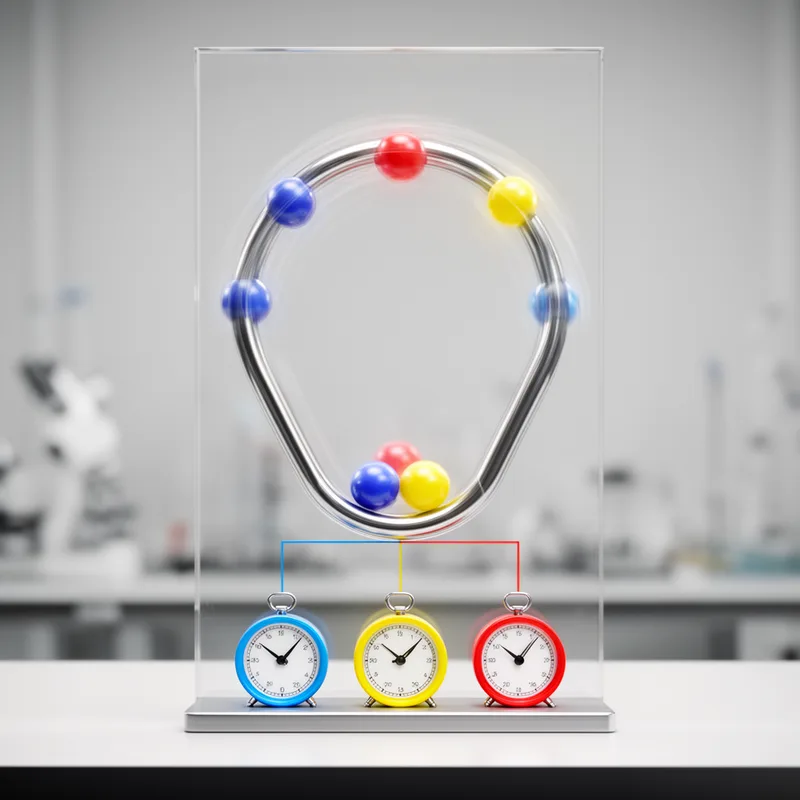
A tautochrone is a type of curve that allows a marble to slide down from any height to the lowest point in the same time.
-
Engineers use the concept of a tautochrone to design tracks that ensure smooth and consistent movement.
-
In physics, understanding the properties of the tautochrone helps in studying motion and gravity.
Surface Forms
Morphology
tautochrone = tauto + chrone
Built from technical Greek combining forms ('tauto-' = same, '-chrone' = time) that are not productive or familiar to typical B1 learners, so the meaning cannot be reliably inferred from common English words.
Etymology
Tautochrone comes from Greek parts tauto- meaning 'same' and -chrone from chronos meaning 'time', the same root you see in synchronize. So, a tautochrone is a curve that makes objects reach the bottom in the 'same' 'time' no matter where they start.