

tangible goods


 1
3.5
1
3.5
- noun
- /ˈtæn.dʒə.bəl ɡʊdz/
- During the charity event, volunteers collected tangible goods such as food and clothing for those in need.
Examples
-
Transferring cost measurement tools designed for tangible goods to cybernetic contexts could foster the development of highly efficient but intellectually unchallenging course content.
Academic text (2002) -
We need to distinguish between productivity (of tangible goods, labor, etc.) and fiscal transactions, which may simply be the exchanging of IOUs that do not actually accomplish anything (derivatives, securitized debt, and other forms of gambling).
Blog text (2) -
It has become a digital world, but we still have the ability to create physical and tangible goods from our digital art.
-
How do you go into a physical product, a tangible good that's manufactured?
-
Thus, these digital-based markets focus largely on reselling tangible goods.
Blog text (9) -
The store specializes in selling tangible goods like furniture and clothing.
-
Many businesses are shifting their focus from services to tangible goods that customers can physically touch and use.
Synonyms
 ∞
1.0
∞
1.0
A thing that people make to sell, like a phone or shampoo
 7
3.0
7
3.0
A thing you can touch that belongs to someone
 1
2.8
1
2.8
Things you can touch and own like books or phones
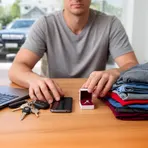
A thing you own that you can touch
Antonyms

How Tangible

Surface Forms
Morphology
The meaning 'items or products that have a physical form' is directly and transparently derived from combining 'tangible' (able to be touched) with 'goods' (products); the noun phrase composition follows standard English semantics. This concept is cross-linguistically common, so a B1 learner who knows both constituents would readily infer the MWE's meaning.
Etymology
The phrase tangible goods comes from a simple idea: tangible means 'able to be touched' and goods are things you buy or sell. So, tangible goods means 'items with a physical form you can hold or handle'.