
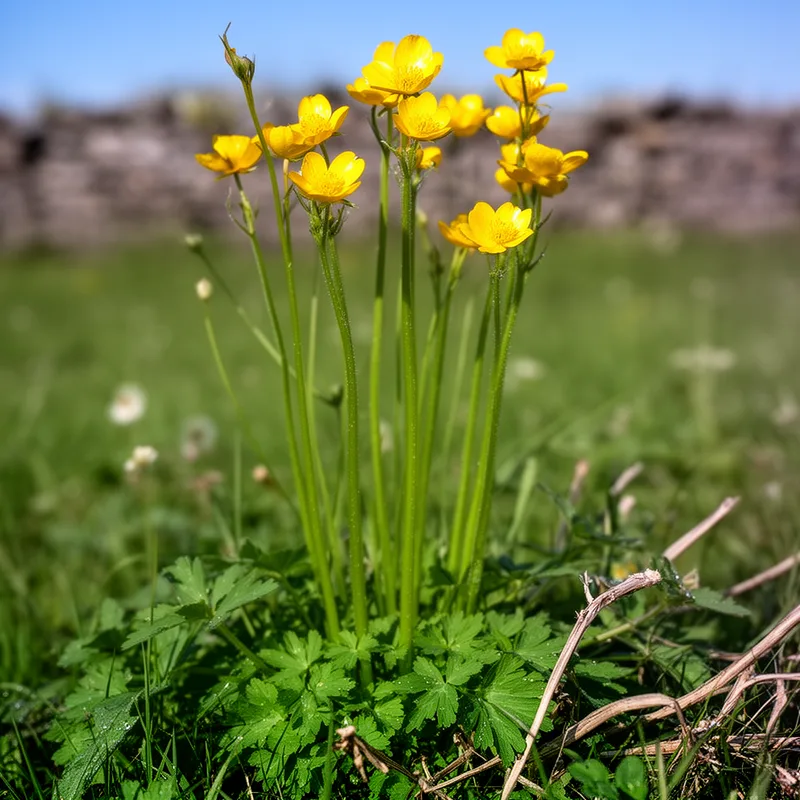
tall crowfoot
- noun
- UK
- The meadow was dotted with bright yellow tall crowfoot in early May.
Examples
-
Many gardeners love the tall crowfoot for its vibrant flowers.
-
Invasive populations of tall crowfoot have been observed spreading in North American wetlands.
-
Gardeners appreciate tall crowfoot for its hardy nature and cheerful flowers.
-
The meadow was dotted with bright yellow tall crowfoot in early May.
-
The tall crowfoot blooms beautifully in the spring.
-
Invasive populations of tall crowfoot have been observed spreading in North American wetlands.
-
Many gardeners love the tall crowfoot for its vibrant flowers.
Synonyms

A tall wild plant with bright yellow spring flowers that can poison farm animals

A common yellow buttercup that grows in meadows in Europe and North America

A wild plant with tall stems and bright yellow flowers

A wildflower with bright yellow spring flowers found in meadows
Surface Forms
Morphology
The phrase 'tall crowfoot' is a straightforward adjectival modification: 'tall' describes the stature of the noun 'crowfoot' (a type of flowering plant), so the combined meaning is simply a crowfoot plant that is relatively tall. This follows a common adjective+noun compositional pattern that a B1 learner who knows both constituents can readily infer.
Etymology
The name tall crowfoot may come from the plant's split leaves that look like a crow's foot, and the word tall marks it as a taller kind of buttercup, so the name helps you picture the plant.

