
talking book
 1
3.7
1
3.7

- noun
- /ˈtɔːkɪŋ bʊk/
- Archaic
- Soon, I hear the electronic beep of a talking book from the toy department, a rubber-duck squeak from infants, and the bike horn again, louder and faster this time.
Examples
-
Although talking books for the visually impaired were introduced in the 1930s, it wasn't until the 1950s that records could handle forty-five minutes of content, making audiobooks a reality.
Academic text (2015) -
Recorded for the Library of Congress in the talking books studio of the American Foundation for the Blind, Incorporated, solely for the use of the blind.
Academic text (2000) -
Pictello is a simple way to create visual stories and talking books.
Academic text (2014) -
After her vision loss, she found comfort in listening to talking books that allowed her to enjoy her favorite stories again.
-
Libraries often provide talking books for members who prefer listening instead of reading printed text.
-
Many students with learning disabilities benefit from talking books as they help improve comprehension.
Synonyms
 18
3.0
18
3.0
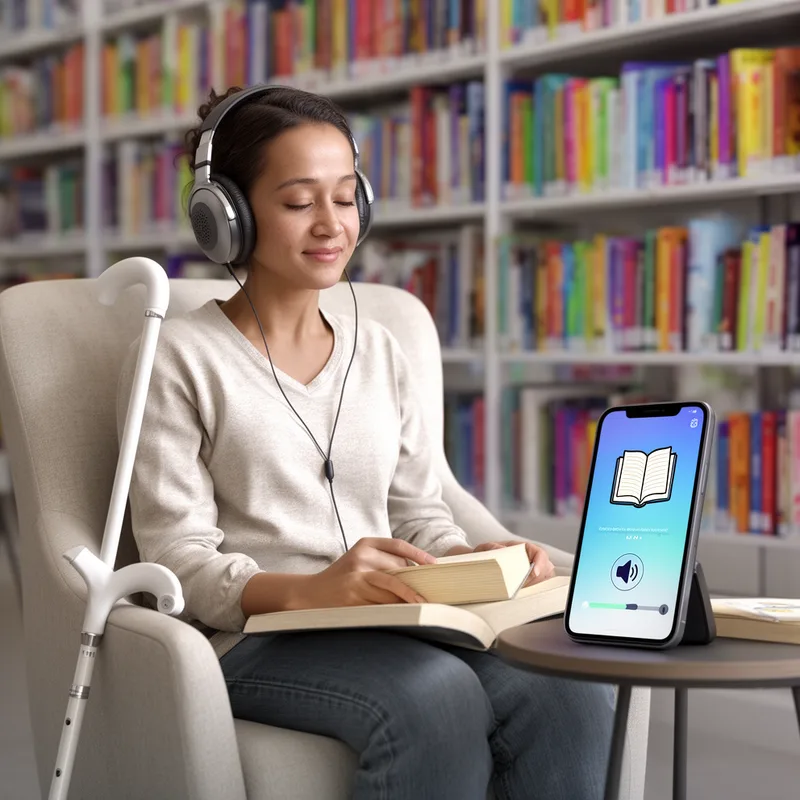
A recording of a book being read aloud so people can listen
Surface Forms
Morphology
The meaning 'a recording of a book being read aloud' is directly derivable from combining 'talking' (spoken) with 'book' (a published book): it denotes a book that 'talks' or is presented in spoken form. This compositional noun–modifier pattern (equivalent to 'audiobook') is cross-linguistically common and follows normal English semantics, so a B1 learner who knows both words would likely infer the meaning.
Etymology
Talking book comes from old recordings where someone read a book out loud, so the talking book seemed to 'talk' to the listener. So today talking book means 'a recording of a book', often made for people who cannot see the page or who prefer listening.