

talipes calcaneus
- noun
- /ˈtælɪˌpiːz kælˈkeɪniəs/
- Specialized
- The newborn was diagnosed with talipes calcaneus and referred to an orthopedic specialist.
Examples
-
Treatment for talipes calcaneus often involves physical therapy and sometimes surgery.
-
A pronounced talipes calcaneus can make walking difficult if not corrected early.
-
The doctor diagnosed him with talipes calcaneus.
-
Children with talipes calcaneus may need special shoes.
-
The newborn was diagnosed with talipes calcaneus and referred to an orthopedic specialist.
-
A pronounced talipes calcaneus can make walking difficult if not corrected early.
-
Treatment for talipes calcaneus often involves physical therapy and sometimes surgery.
Synonyms


 1
9.9
1
9.9
A foot that is twisted at birth and points down or inward
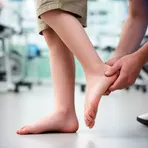
A foot problem where the toes point down and the heel cannot touch the ground

A foot turned outward so the sole faces away from the center of the body
Surface Forms
Morphology
The term clearly composes two descriptive constituents: talipes (twisted/club foot) + calcaneus (heel bone), so a learner who knows both meanings can infer it denotes a form of talipes involving the heel (toes up, walking on the heel). Although clinical and Latin-derived, the meaning is literal and compositional rather than idiomatic.
Etymology
Talipes calcaneus is a medical name made from old words: talipes meaning 'foot' and calcaneus meaning 'heel', and it gives a picture of a foot tipped up so the 'toes point upward' and the person walks on the 'heel'. That's why it names the condition where the toes point up and the heel bears the weight.