
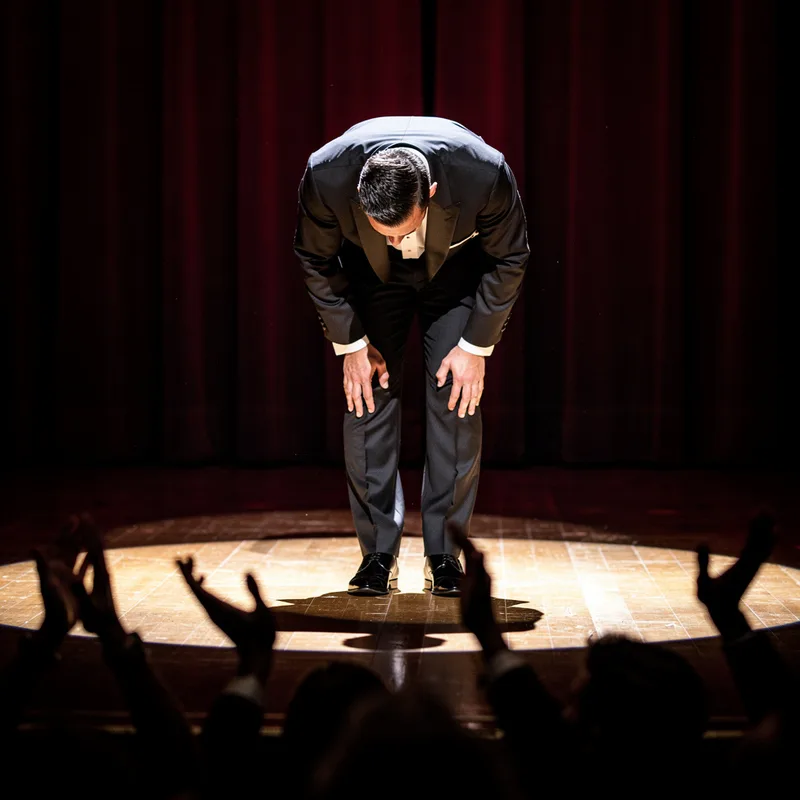
to take a bow
 14
3.7
14
3.7

- idiom
- /teɪk ə baʊ/
 :
hacer una reverencia
:
hacer una reverencia
- After the performance, the lead actor stepped forward to take a bow amidst loud applause.
- stand and take a bow
- then you took a bow
- get to take a bow
So, Lynn, stand up and take a bow right here.
- So, Lynn, stand up and take a bow right here.
Examples
-
Towards the end of the event, the performers came out and lined up on stage to take a bow, each making his or her exit before a loudly applauding audience.
Academic text (1998) -
At the end, the audience wanted the hero to stand up and take a bow.
Blog text (12) -
Come on, Dad, stand up and take a bow.
-
All right, take a bow.
-
Stand up, take a bow!
-
Stand up, girls, and take a bow; you made all the difference tonight.
Blog text (32) -
The boys rush back out, take a bow, and run back off, having a great time.
Fiction book (1992) -
The spotlight is finally yours, so take a bow.
-
Stand and take a bow, Mr. Cooper.
Fiction book (1995) -
Eddie, take a bow!
Synonyms

 1
3.9
1
3.9
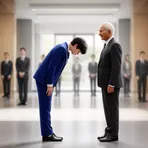
Bend your upper body forward from the waist to show respect
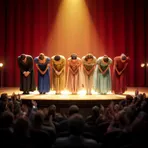
To come on stage at the end of a show and thank the audience

To bow in a formal way to show respect or say goodbye
Antonyms

How Public

Surface Forms
Morphology
The phrase is compositionally built from 'take' + 'a' + 'bow' and follows the common English pattern (e.g. 'take a seat', 'take a walk') where 'take' + noun means to perform the action denoted by the noun. Since 'bow' as a bodily bend is literal and the construction is cross-linguistically familiar, a B1 learner who knows the words would readily infer the meaning.
Etymology
Take a bow comes from actors and other performers bending forward in a bow at the end of a show to thank the audience and accept applause. That's why it means 'to acknowledge applause or praise'.