

to take a picture
 166
1.4
166
1.4

- phrasal verb
- /teɪk ə ˈpɪkʧər/
- I asked my friend to take a picture of us at the concert.
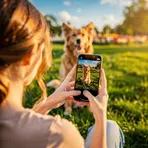
- take a picture with a camera
Loading YouTube…
Watch on YouTubeThen he goes, hey, can I take a picture of you?
- Then he goes, hey, can I take a picture of you?
- We actually forced them to recreate it and took a picture later.
- I want my wife to take a picture of just me for Twitter.
- I'm not taking a picture with a nerd rabbit.
Examples
-
Hey, can you take a picture of me for my social media?
-
Why don't you take a picture?
-
Then he goes, hey, can I take a picture of you?
-
I want to take a picture of me and Ben.
-
Doc, can you take a picture of all of us?
-
"Yes, all we have to do is take a picture and send it in."
Fiction book (2001) -
I have a right to take a picture if I want.
Academic text (2013) -
Will you take a picture with me, Princess?
-
How about if we try to take a picture of the birds?
Fiction book (1993) -
I'm just going to take a picture of that on my phone.
Synonyms
 397
3.2
397
3.2
To take a photograph or film
 211
3.3
211
3.3
To record video, images, or sound from a device
 202
2.1
202
2.1
To take a picture of a person, place, or thing with a camera
 136
1.0
136
1.0
To use a camera or phone to make a picture
 47
2.8
47
2.8
Take a quick informal photograph
 5
3.7
5
3.7
To take a photo or short video that shows the scene and people's feelings clearly
Antonyms

How Careful

Surface Forms
Morphology
The meaning 'to use a camera to capture an image' is directly and transparently derived from combining 'take' (to capture) with 'picture' (an image); the indefinite article 'a' does not change the compositional meaning. This straightforward verb + noun object structure is cross-linguistically common and predictable, so an average B1 learner who knows the constituent words will understand the MWE.
Etymology
The phrase take a picture comes from the idea that a camera 'takes' a scene as if picking it up and keeping it, so the view becomes a saved image; the verb take is like picking up and picture is the kept image. So, to take a picture means 'to use a camera to make and keep an image'.