

to take on water
 11
5.5
11
5.5

- phrasal verb
- Specialized
- After hitting a rock, the boat started to take on water, putting everyone on board in danger.
- boat taking on water
- ship took on water
- began to take on water
Loading YouTube…
Watch on YouTubeWe're we're we're taking on water, but for some reason we're not sinking.
- We're we're we're taking on water, but for some reason we're not sinking.
- Yeah, when we got into the water and to start taking on water.
Examples
-
As the wind howled, the vessel lurched sickeningly from side to side, rapidly taking on water.
Academic text (2007) -
They were out fishing Monomoy near Nantucket Sound... when the boat started taking on water.
-
Yes, sir, but we're taking on water fast.
-
Your ship might be taking on water.
-
We took a big hit down here, and we're taking on water fast.
-
I think we're taking on water.
-
Flooding is slow, but we're still taking on water.
-
The Romney ship was taking on water at a terrifying rate.
Blog text (25) -
The 180-foot-long ship reportedly had no power and was taking on water.
Blog text (33) -
We have a 75-foot fishing vessel in distress, taking on water in high seas.
Synonyms
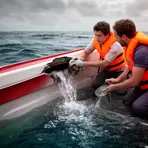
To allow water into a boat through a hole in its side
Antonyms

How Flooded

Surface Forms
Morphology
The sense 'to begin to fill with water' is directly inferable from combining the verb 'take'/'take on' (to receive or accept) with the object 'water' — i.e. a vessel receiving water. This is a concrete, mostly literal image (and is mirrored in other languages, e.g. French 'prendre l'eau'), so a B1 learner who knows the constituents would readily grasp the meaning.
Etymology
Take on water comes from a simple image: a boat gets a hole and takes on water, so water pours in and the boat fills up and may sink. So, it means 'to begin to fill with water'.